The easiest way to sync Airtable and Google Sheets
Get true, two-way sync between Airtable and Google Sheets in minutes. Update data in one tool, and Whalesync mirrors it in the other.


Empowering top operators — From startups to enterprises
-
 Series C$350M
 -
 Series C$330M
 -
 Series C$100M
 -

-
 Series B$72M
 -
 Series C$30M
 -
 Series A$50M
 -
 Series B$86M
 -
 Series B$65M
 -
 Series B$100M
How to connect Airtable and Google Sheets in 3 steps
Whalesync doesn't just connect Airtable and Google Sheets; it syncs them. Simple connections are brittle. They only move data one way, creating data silos and requiring constant maintenance.
Whalesync was built on a different principle: true, two-way sync. This creates a single, reliable source of truth between your most important tools. And while it's powerful enough for engineers, it was designed for operators. You can build a rock-solid data integration in minutes.
Connect your apps
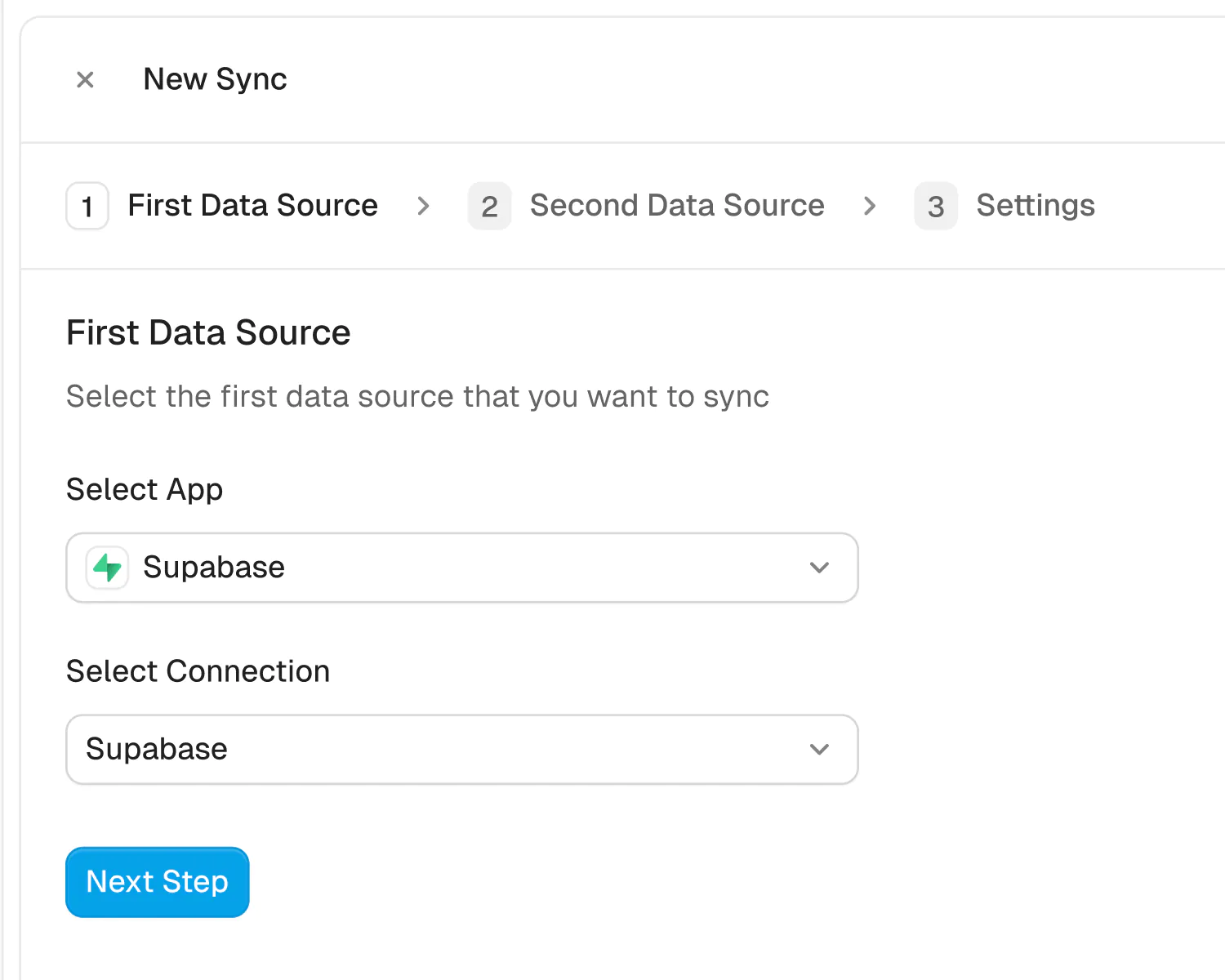
Securely connect your Airtable and Google Sheets accounts in seconds. Just authorize Whalesync with a few clicks and you're ready for the next step.
How to sync Airtable to Google Sheets in 5 minutes
Airtable and Google Sheets are two of the most popular tools for managing and analyzing data, but they serve very different purposes. Airtable combines the structure of a database with the usability of a spreadsheet, combined with great collaboration features.
Google Sheets, on the other hand, is the go-to tool for number crunching, and lightweight data analysis and not so great for collaboration.
They’re both powerful in their own right, and Airtable might be the backend for your operations, you might use Airtable as your database and need to report or analyze it in Sheets. If you need your data in both Airtable to Google Sheets, you might be stuck in a loop of manual copy-pasting, constant exports, or versioning issues.
The ideal solution is to have your data in Airtable and Google Sheets without the hassle of manual uploads, exporting CSVs and versioning issues. Here’s how you can connect and sync Airtable to Google Sheets in five minutes.
Let’s begin.
Why should you connect Airtable and Google Sheets?
While Airtable is great for structuring and organizing data, many teams still prefer Google Sheets for its flexibility with formulas, charts, and quick number crunching. Whether you're building dashboards, calculating metrics, or running scenarios, Sheets often feels more familiar and powerful for analytical work.
When you sync Airtable to Google Sheets, you can:
- Use Airtable to collect, store, and structure clean data
- Use Google Sheets to run advanced formulas, pivot tables, or visualizations
- Eliminate manual exporting, version mismatches, and time-consuming copy-pasting
When should you connect Airtable and Google Sheets?
Here are a few common scenarios where connecting the two makes sense:
- You track data in Airtable but analyze it in Sheets: You use Airtable to manage structured records, like campaigns and product data. But when it’s time to analyze trends, run formulas, or build reports, your team turns to Google Sheets. Syncing ensures that the data you’re analyzing in Sheets is always up to date.
- You plan in Airtable but report in Sheets: You might manage project timelines, launch calendars, or content schedules in Airtable, but your reporting workflow takes place in Google Sheets. Syncing ensures that your reports are always current.
- You enrich data in Airtable, but need to share results in Sheets:
You might use Airtable to enrich records with tags, statuses, or linked relationships. Once your dataset is polished, sharing it via Google Sheets makes collaboration easier, especially with teams who prefer spreadsheets.
Here’s a step by step guide to sync Airtable and Google Sheets. You can also check out our YouTube tutorial here:
How to sync Airtable and Google Sheets
Here’s a step by step guide to sync Airtable and Google Sheets
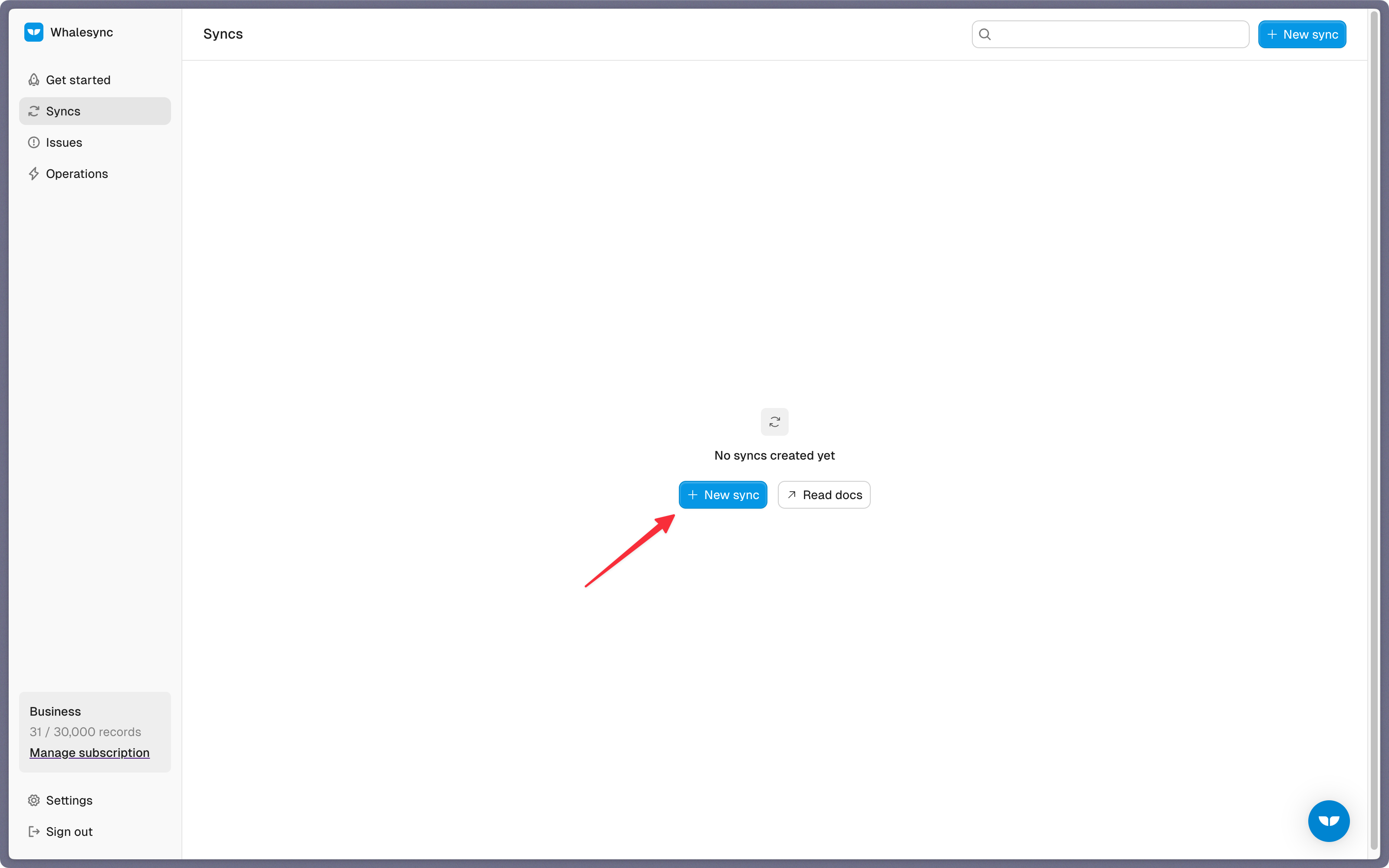
Step 1: Create a new sync
Log in to your Whalesync account and click ‘New sync’
Step 2: Authorize your apps
Select the apps you want to connect. In this case, it’s Airtable and Google Sheets. Then, authorize these two apps. Authorizing the apps enables Whalesync to have access to your app data in order to complete the syncs.
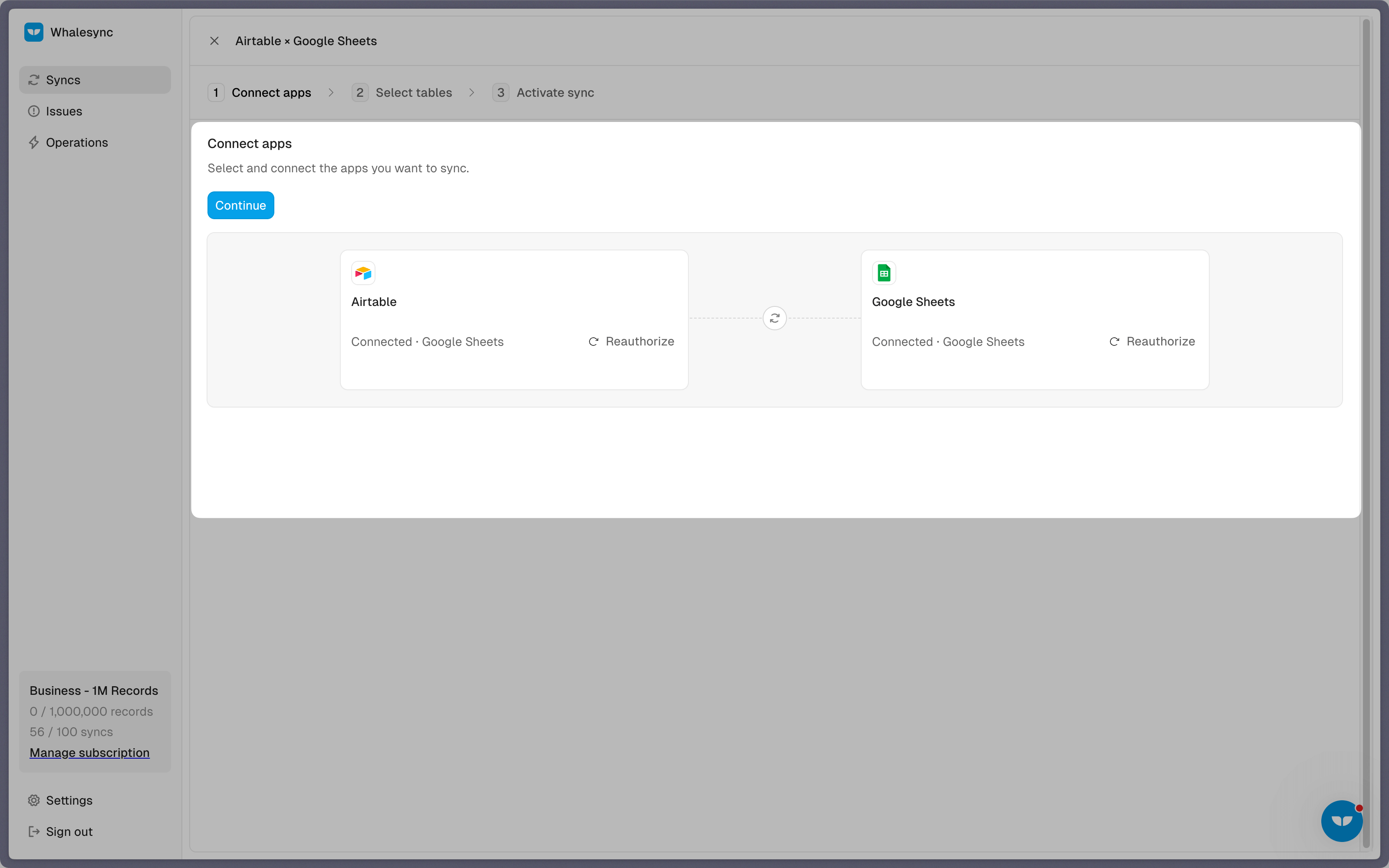
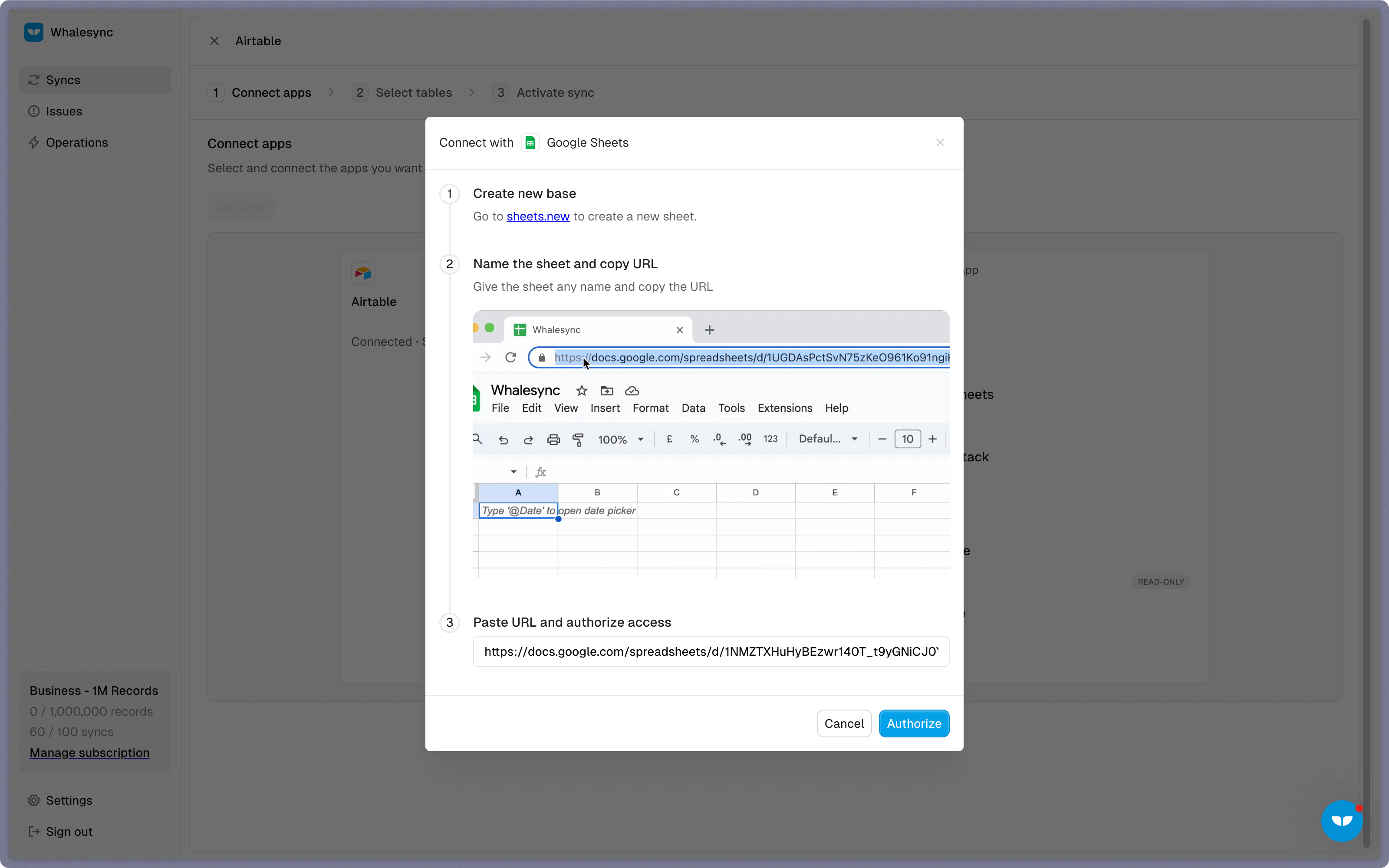
When you’re authorizing the apps, you need to select the Airtable base you want to sync the data from. When you’re authorizing Google Sheets you need to copy and paste the URL of the Google Sheets you want to connect to.
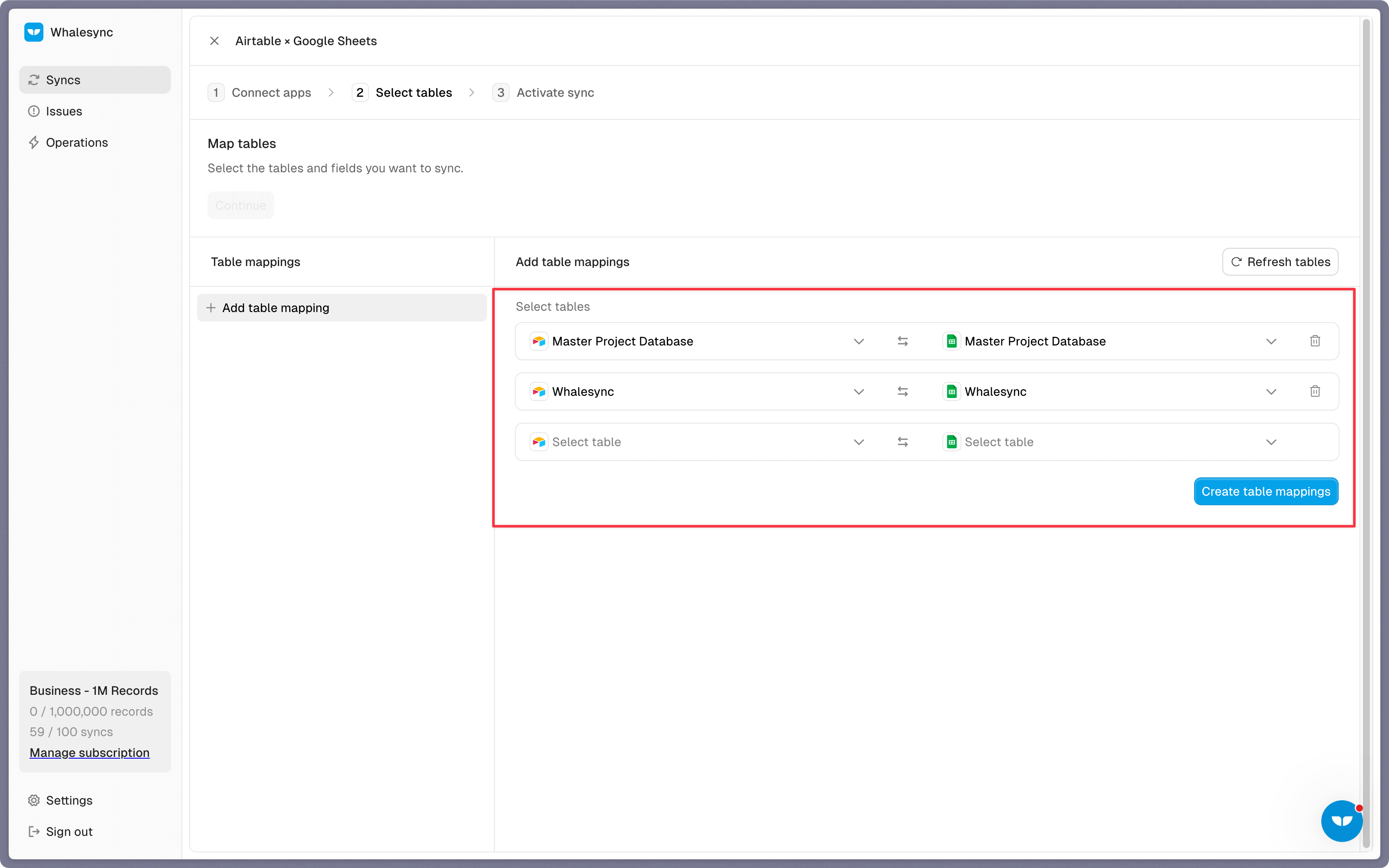
Step 3: Map your tables
Choose the tables that you want to sync from Airtable to Google Sheets. You can add multiple table mappings to a sync and related fields. You can also create the tables you want to map from Whalesync’s user interface, making it much faster to get set up.
Step 4: Map your fields
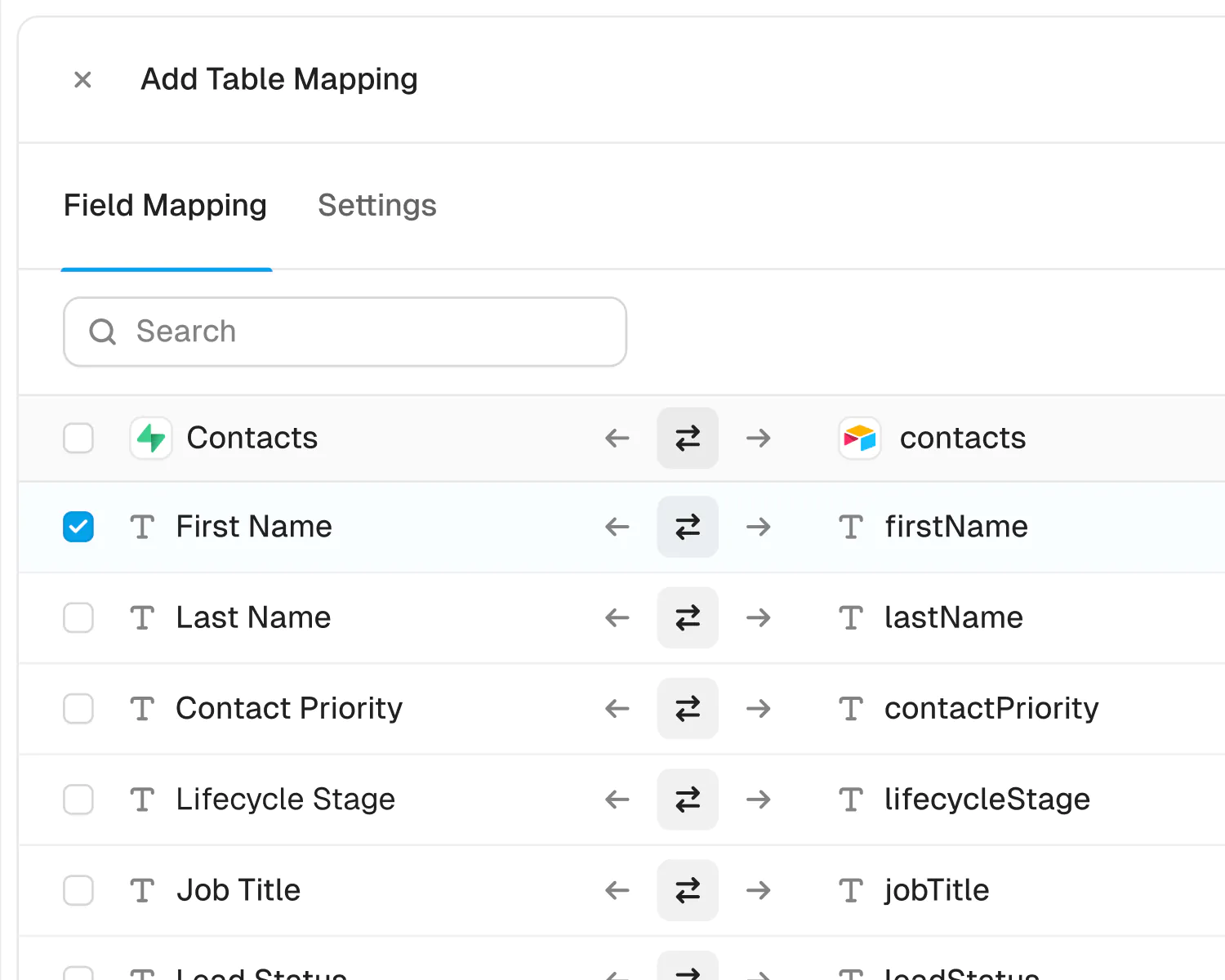
You can choose how many fields you want to map, whether you want to map all of the fields or just a few.
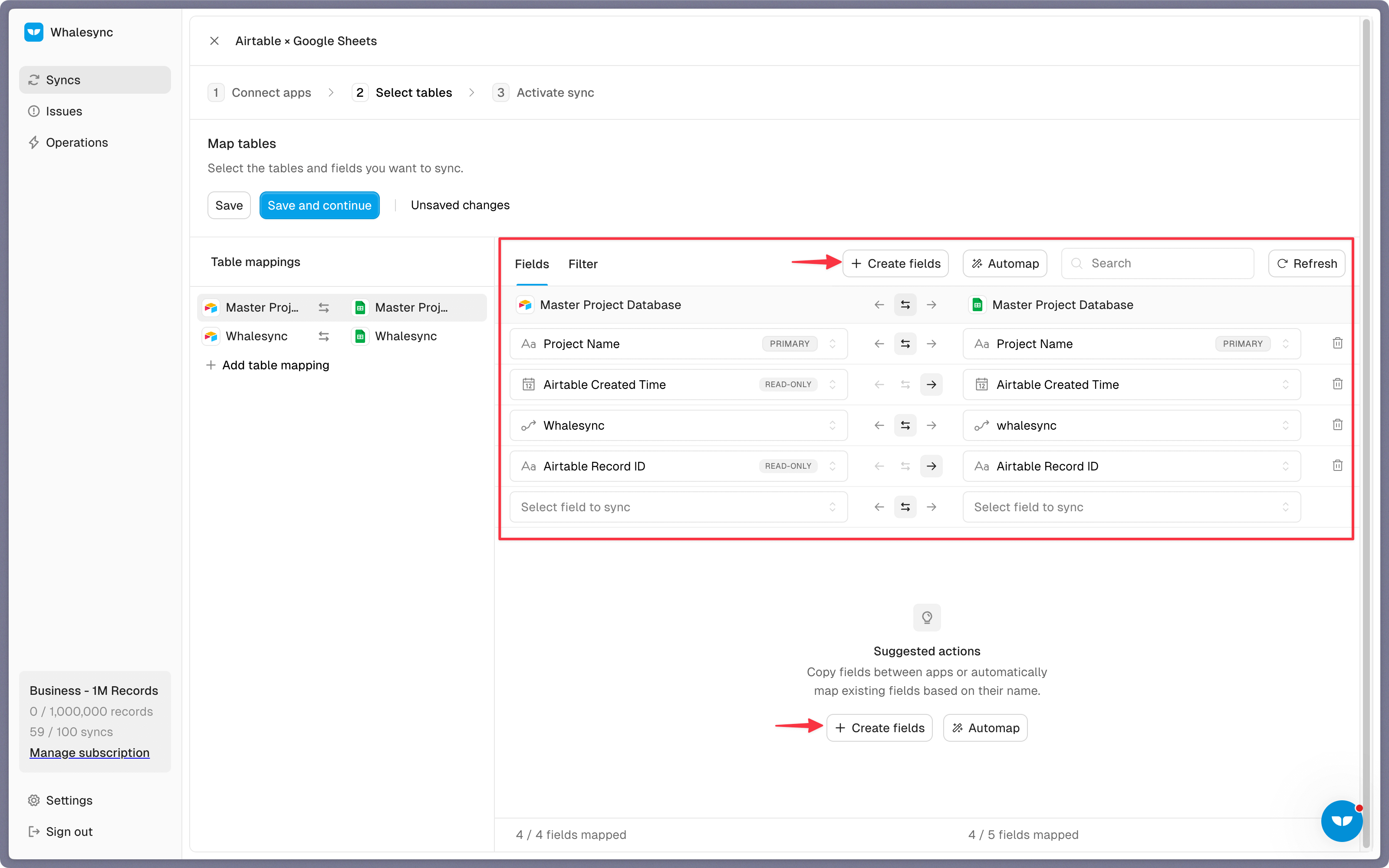
You can also create fields here.
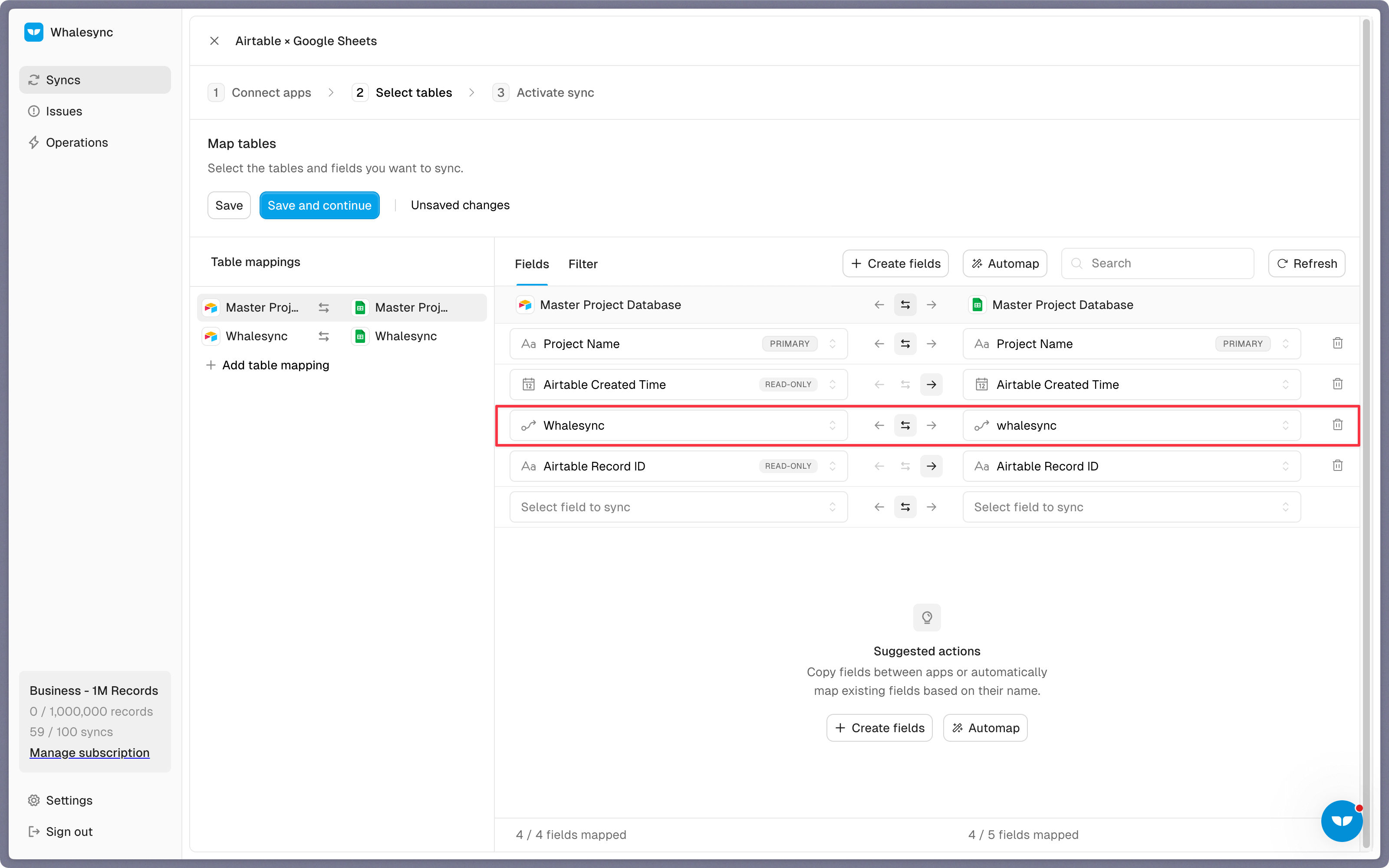
If you have existing data in your Airtable base, Whalesync will match the records according to the fields you mapped.
If you are starting from a new base that doesn’t have any data, once you start entering data into your Airtable base, the data will automatically sync to Google Sheets.
Step 5: Activate sync
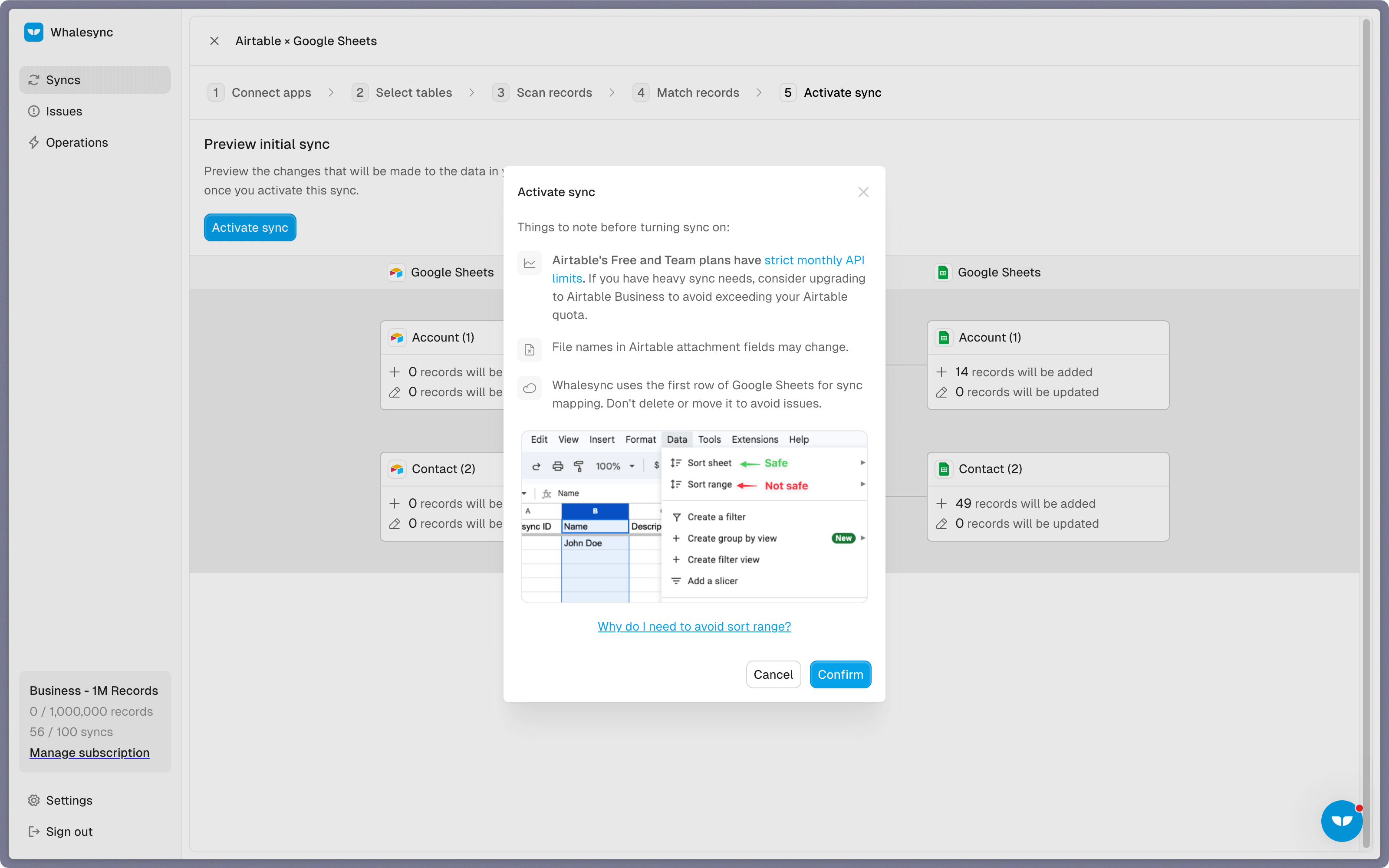
The final step is to activate your sync! Before you activate your sync, you’ll see a preview that shows you how many records will be added to each tool.
You’ll also see this notification pop up which advises that you don’t delete or move the first row of your Google Sheets as Whalesync uses this for sync mapping.
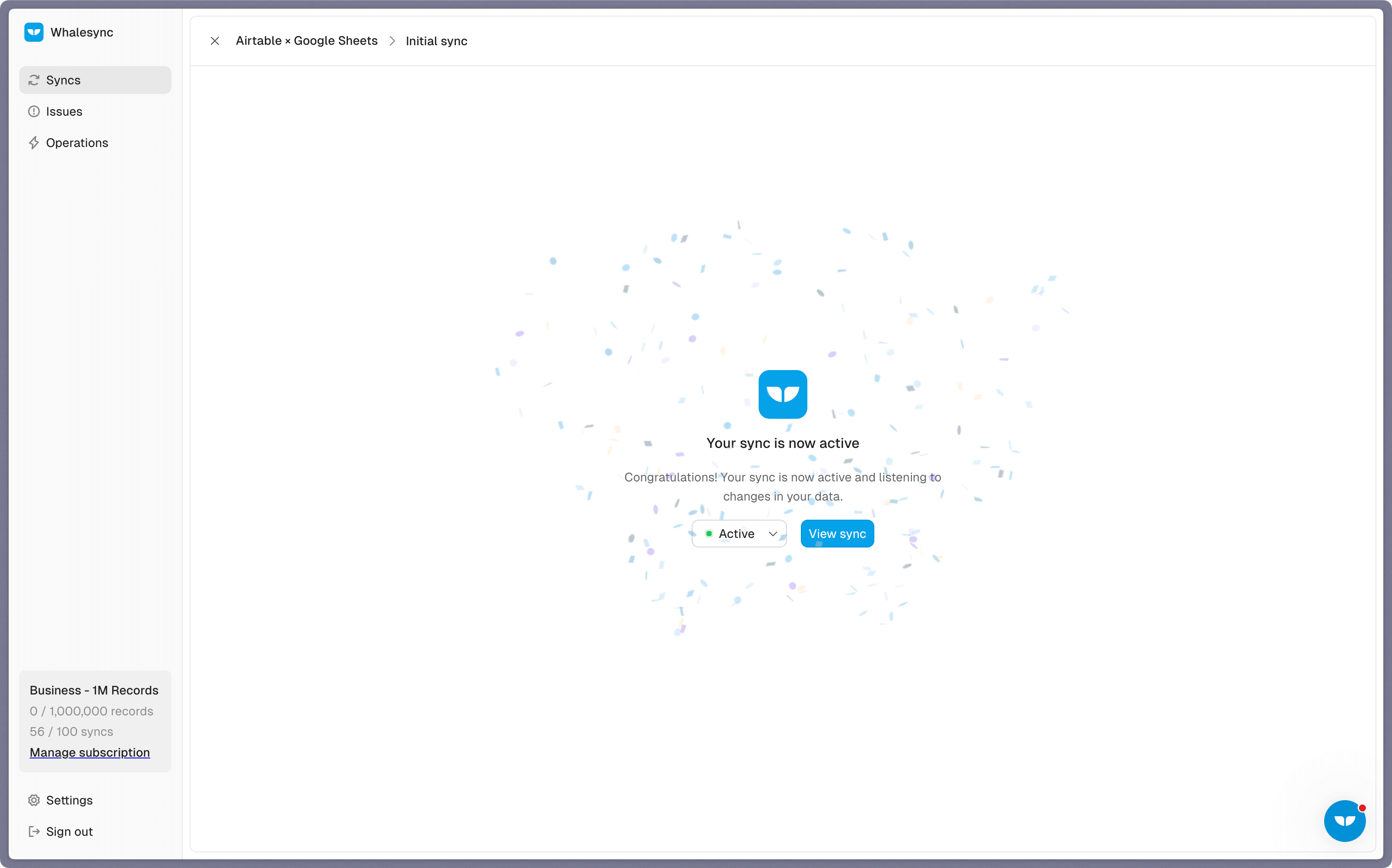
Done! Airtable and Google Sheets is synced 🤝
Now it’s time to start adding to your Airtable base and view your data across both tools.
Start syncing today
If you track data in Airtable but analyze it in Google Sheets, you need a reliable way to get up to date data across both tools. With Whalesync, you can also set up a two-way sync between Airtable and Google Sheets, so updates sync automatically between tools.
Ready to connect Airtable and Google Sheets? Get syncing today
About Airtable and Google Sheets
Airtable
About
Airtable combines the power of a database with the ease of a spreadsheet. Now with Whalesync, you can sync Airtable and all your other tools. Airtable is great for managing and editing data. Our Airtable data sync lets you instantly pull data from tools like Salesforce, Hubspot, or Shopify into an Airtable base. You can then sync that data wherever it needs to be. Whalesync is bi-directional so you can create a two-way sync between Airtable and Google Sheets, Notion, and more.
Category
Supported Objects
-
All TablesSupported
Google Sheets
About
Google Sheets is the spreadsheet in Google Workspace, and for many teams it is where the real work happens. Whalesync's Google Sheets sync turns a spreadsheet into a live window into your other tools. Create a two-way sync between Google Sheets and Supabase, Airtable, Notion, or your CRM, then edit records in a familiar grid while Whalesync keeps every connected app up to date. Build reports on live data, clean records in bulk, and give non-technical teammates a safe way to update data without touching the source system.
Category
Supported Objects
-
All TablesSupported

Powerful features, built for reliability
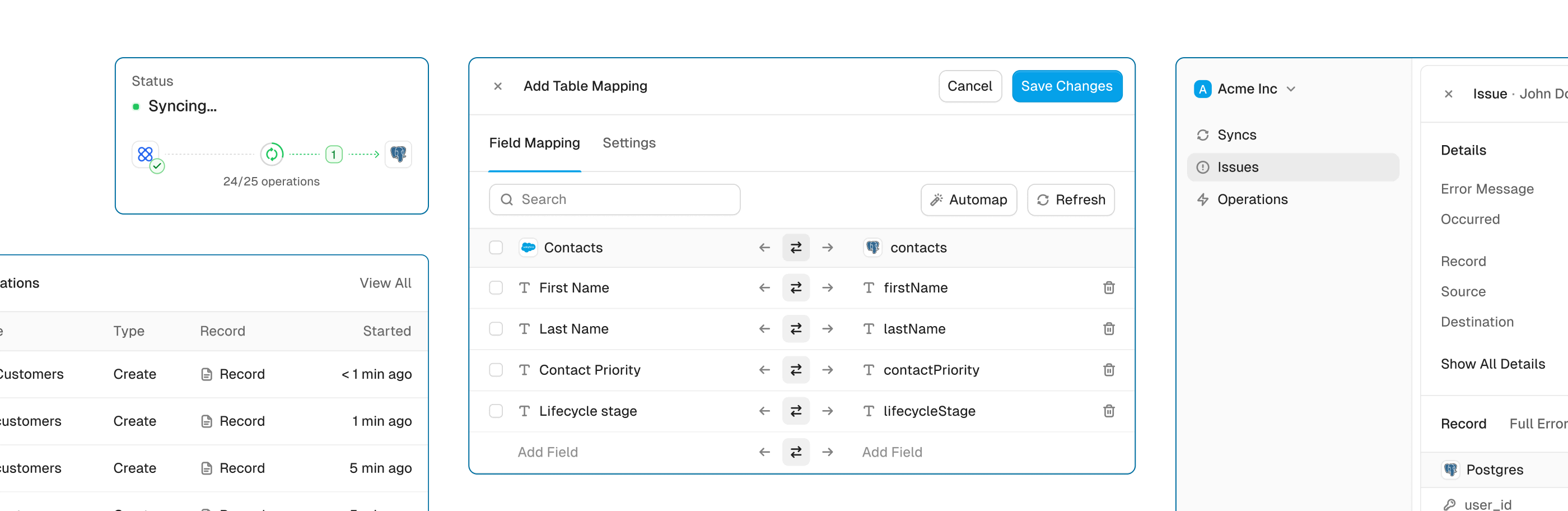
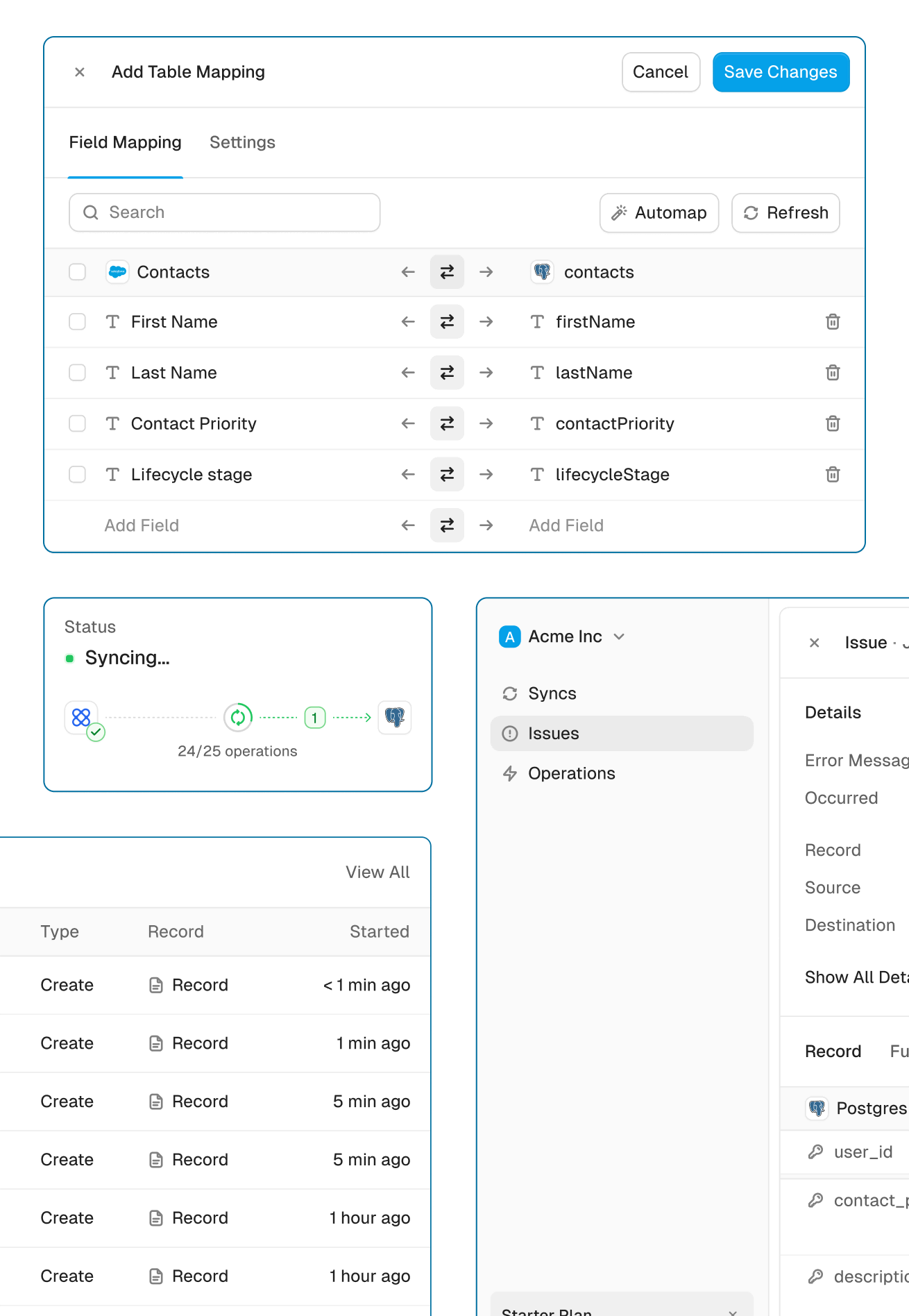
Get the power of an engineering-grade data sync with the simplicity of a no-code tool. Whalesync lets you build a robust, two-way, real-time sync between your apps in minutes, all through a simple visual interface.
Real-time & historical sync
Instantly sync new changes and bring over all your historical data. Your records will be up-to-date across apps from day one.
Efficient error handling
Instant email alerts for quick issue monitoring.
Automatic API handling
Forget about rate limits. Whalesync automatically manages API traffic and retries to ensure your sync runs smoothly without breaking.
Advanced filters
Precision filtering for targeted data sync.
Airtable and Google Sheets guides
Built for Enterprise
Connect your data with top-grade security, role based access control, SSO, and audit logs.


Security
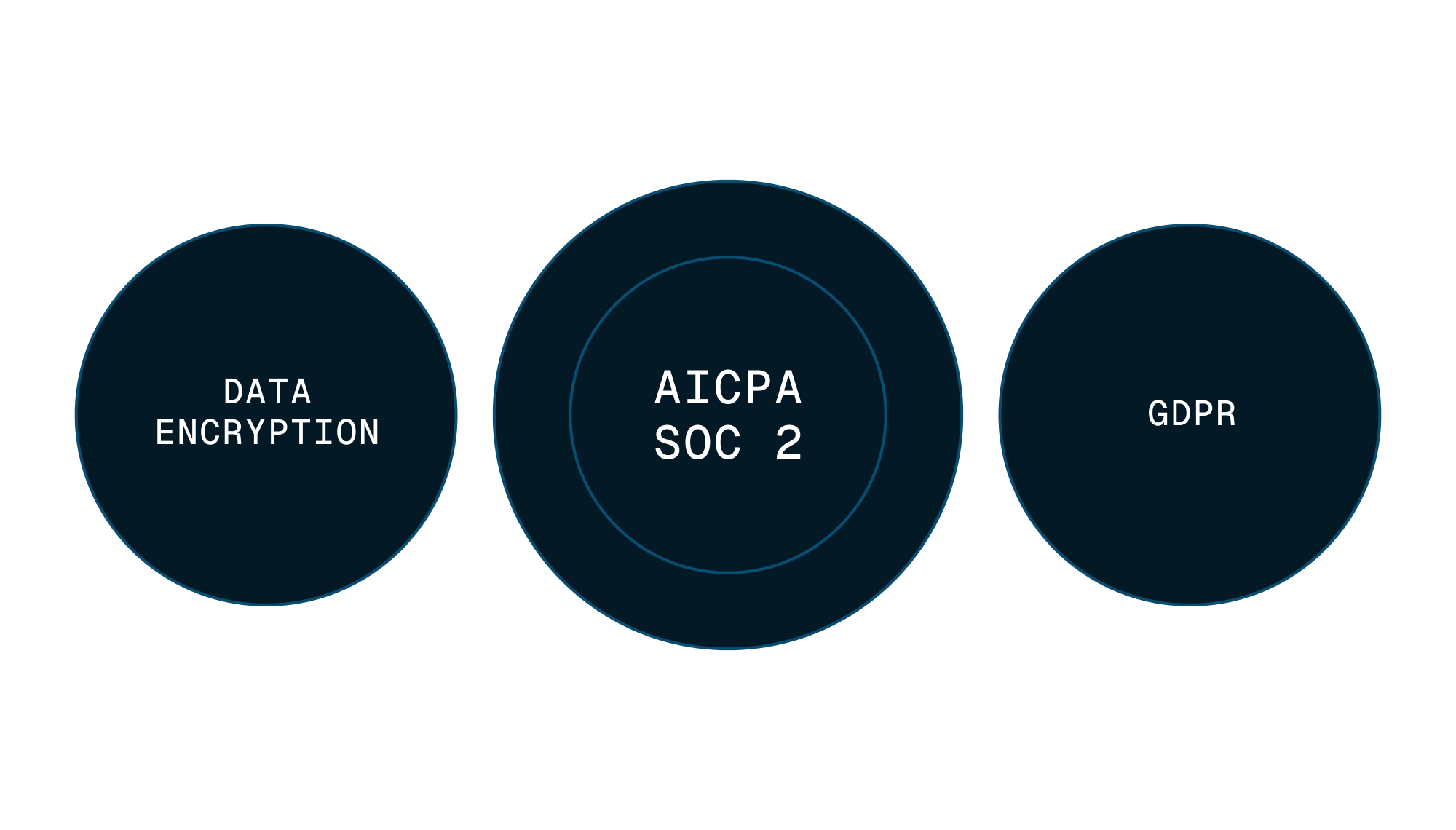
Enterprise-grade data safety with SOC 2 Type II, GDPR compliance, and encryption at rest monitored by Vanta.
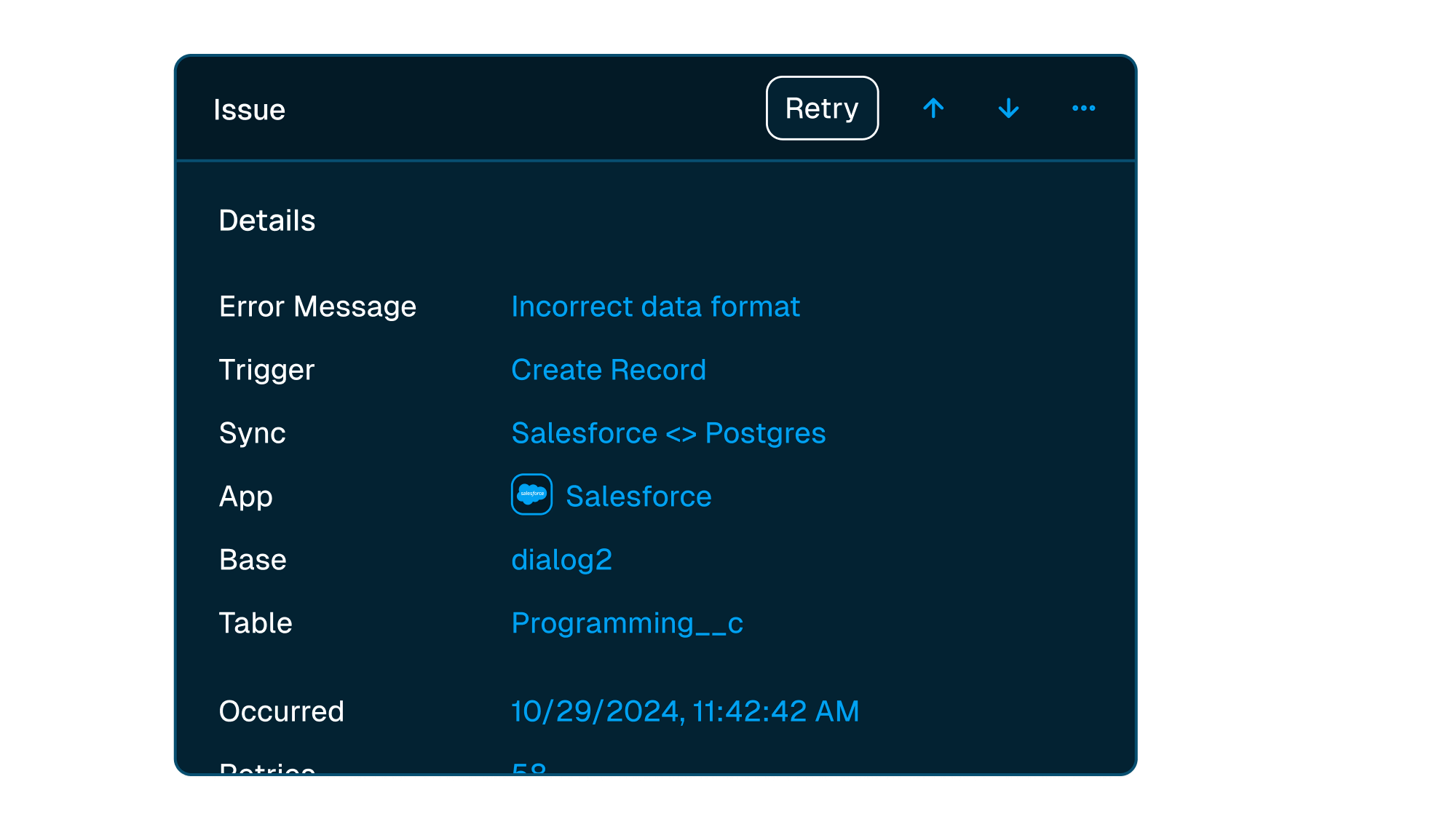


Scale with support
Easily manage issues at scale, while knowing you have a dedicated account manager on stand by to support.
Frequently asked questions
Is it really two-way sync?
Yes! Whalesync offers true two-way sync. Unlike most apps that offer one-way syncs in two directions, Whalesync actually keeps your data in sync bi-directionally. Update data in one app and see it instantly to sync to the other (or vice-versa).
What counts as a "record in sync"?
When a record syncs for the first time it becomes a record in sync. For example, if you sync 10 rows from Airtable to Webflow, you will have 10 records in sync. We do not "double-count" records across the two different apps.
Unlike other automation tools that count updates or tasks, Whalesync allows unlimited updates: those records can change as many times as you'd like.
What is a "sync"?
A sync is a connection between two different apps (e.g. Salesforce & Airtable). When you turn sync on, Whalesync will continuously sync data between your apps.
A single sync includes as many data tables and field as you'd like.
Does Whalesync support multi-reference fields? Rich text?
You bet! We've simplified all the annoying parts of setting up a sync with Zapier. We support multi-reference fields, rich text, and images. For a full list, see our supported fields docs.
What happens if my data has an error and can't be synced?
If data can't be synced (e.g. a required field is missing), Whalesync will alert you on the Issues page. This alert provides the exact error from your destination app and any other info that will help you fix the issue. In the meantime, Whalesync will continue to sync all data that doesn't have errors.
Do you offer a discount for nonprofits?
Absolutely! We love supporting organizations that are making the world a better place, so we're happy to offer a 20% discount to all nonprofits. To apply, just send us a note with proof of your nonprofit status (e.g. your 501(c)(3) determination letter) to support@whalesync.com and we'll get the discount applied to your account.
Other apps to connect






Connect your tools in minutes