The easiest way to sync Salesforce and Postgres
Get true, two-way sync between Salesforce and Postgres in minutes. Update data in one tool, and Whalesync mirrors it in the other.


Empowering top operators — From startups to enterprises
-
 Series C$350M
-
 Series C$330M
-
 Series C$100M
-

-
 Series B$72M
-
 Series C$30M
-
 Series A$50M
-
 Series B$86M
-
 Series B$65M
-
 Series B$100M
How to connect Salesforce and Postgres in 3 steps
Connect Salesforce and Postgres, map the fields you want, and turn sync on. From then on, a change in either app shows up in the other.
Connect your apps
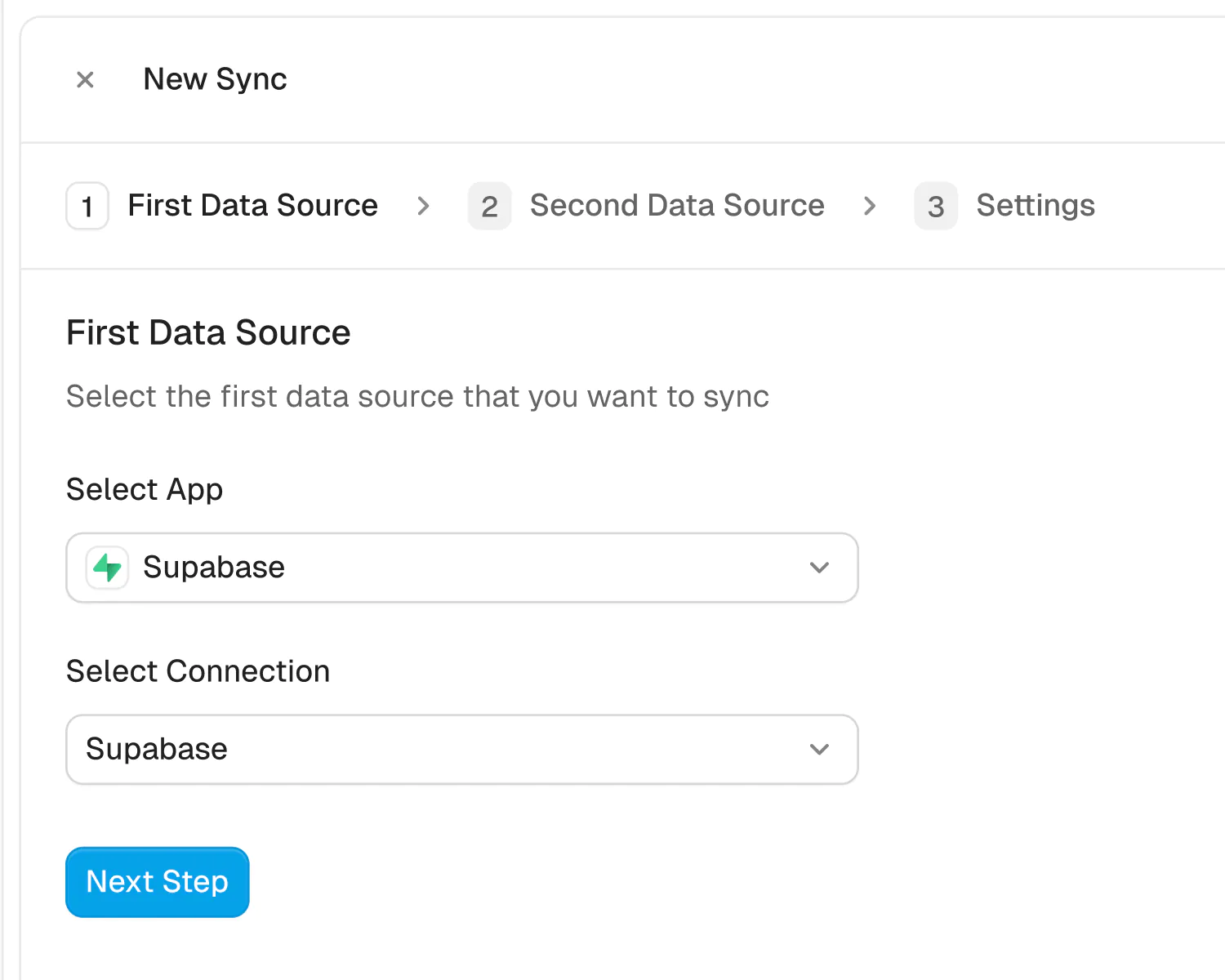
Securely connect your Salesforce and Postgres accounts in seconds. Just authorize Whalesync with a few clicks and you're ready for the next step.
How to sync PostgreSQL to Salesforce in 5 minutes
PostgreSQL is where your product lives. It stores your users, accounts, subscriptions, and usage data, and it powers the internal tools your team depends on every day. Salesforce is where your revenue team lives. It is the system of record for pipeline, accounts, and customer relationships, and it is where your reps spend most of their working hours.
The trouble is that these two systems rarely talk to each other. Sales wants to see product data next to their deals, so someone asks engineering for an export. Engineering is busy, the request waits behind sprint work, and by the time a spreadsheet arrives the numbers are already stale. Meanwhile, the context reps add in Salesforce, like corrected contact details or updated account owners, never makes it back to the database that powers everything else.
Syncing PostgreSQL to Salesforce with Whalesync fixes both sides of that problem. Whalesync is a no-code platform for real-time, two-way data sync, which means changes in Postgres show up in Salesforce automatically, and edits made in Salesforce flow straight back into your database. There are no API scripts to maintain, no cron jobs, and no CSV files.
In this guide, we'll walk through exactly how to connect and sync PostgreSQL to Salesforce in about five minutes. Let's get started.
Why two-way sync beats CSV exports and Zapier
Most teams try to bridge their database and their CRM with one of two workarounds, and both fall short in the same predictable ways.
CSV exports are snapshots. The moment you download one, it starts going stale, and every import is a fresh chance to create duplicate records, mismatch field types, or overwrite good data with old data. Exports also only move data in one direction, so anything your team changes in Salesforce has to be re-exported and re-imported the other way, by hand, forever.
Zapier-style automations are better than manual exports, but they are built around one-way triggers. A zap fires when a single event happens, which means it has no picture of the overall state of your tables. Backfilling existing records is awkward, keeping updates flowing in both directions requires a growing web of separate automations, and when the two systems disagree about a record, nothing reconciles them.
Whalesync takes a different approach: it syncs tables, not events. It treats your Postgres tables and your Salesforce objects as two views of the same data, matches them record by record, and applies changes in both directions in real time. And because it is no-code, the person who owns the CRM can set it up without pulling an engineer off the roadmap.
How to sync PostgreSQL to Salesforce, step by step
Here is the full setup, from a blank account to a live sync.
Step 1: Create your Whalesync account
Sign up for Whalesync and log in. There is a free trial, so you can build and test your sync before committing to anything. Once you are in, click 'New sync' to get started.
Step 2: Connect PostgreSQL
Choose PostgreSQL as your first app and enter your database connection details. The Whalesync PostgreSQL connector reads your schema, so your tables and columns show up in the sync editor ready to be mapped. Pick the database and the tables you want to keep in sync, such as your users, accounts, or subscriptions tables.
Step 3: Connect Salesforce
Next, choose Salesforce and authorize your org. The Whalesync Salesforce connector pulls in your standard and custom objects. Authorizing both apps is what lets Whalesync read and write data on your behalf, which is what makes two-way sync possible.
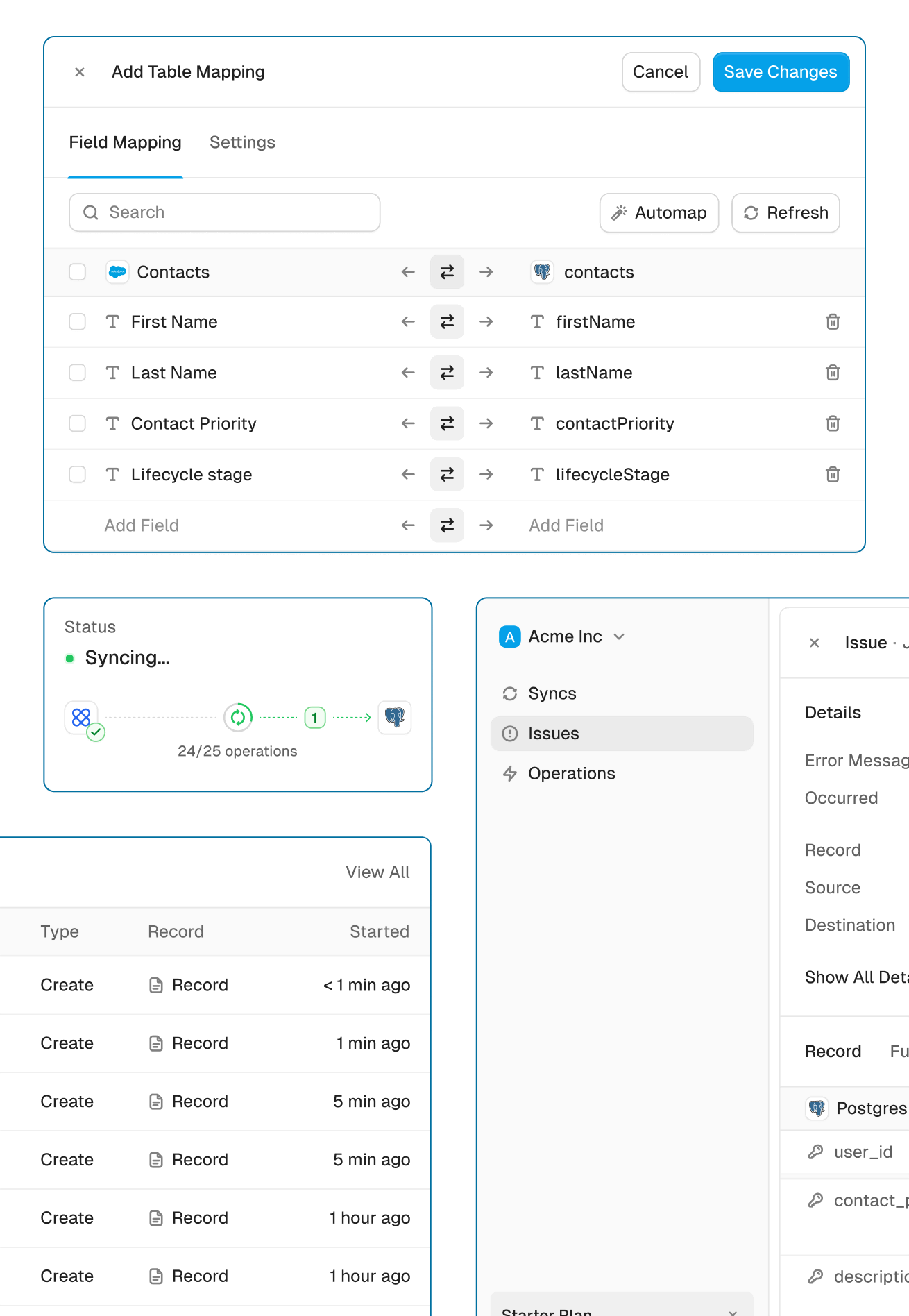
Step 4: Map your tables and fields
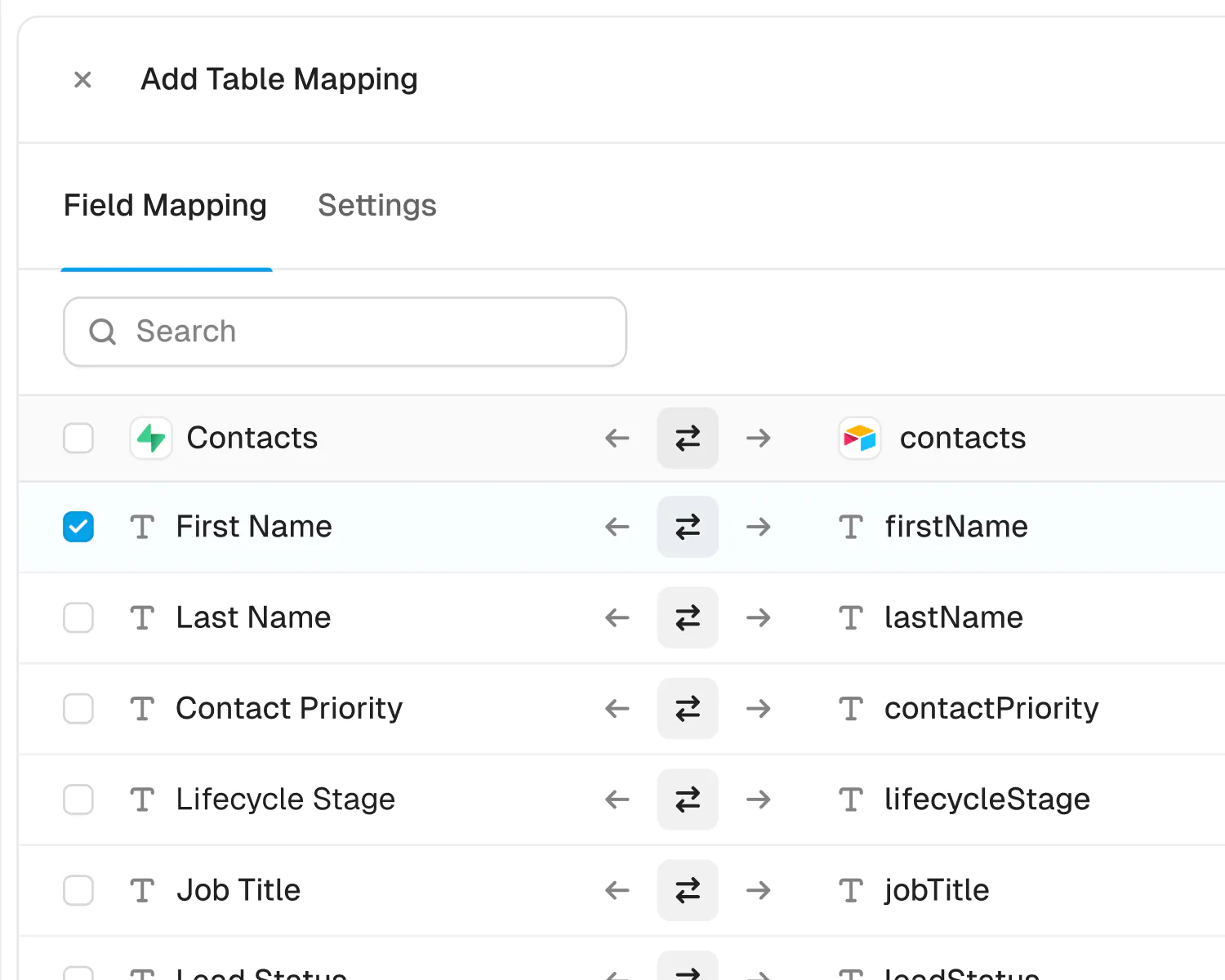
Now decide what syncs to what. Point a Postgres table at a Salesforce object, for example your accounts table at Salesforce accounts, and then map the fields between them. This is normally the most tedious part of any integration, but Whalesync's AI automapping suggests field matches for you, so most mappings take one click to confirm. You can map every field or just the handful you care about, and you can add multiple table mappings to the same sync.
Step 5: Turn on the sync
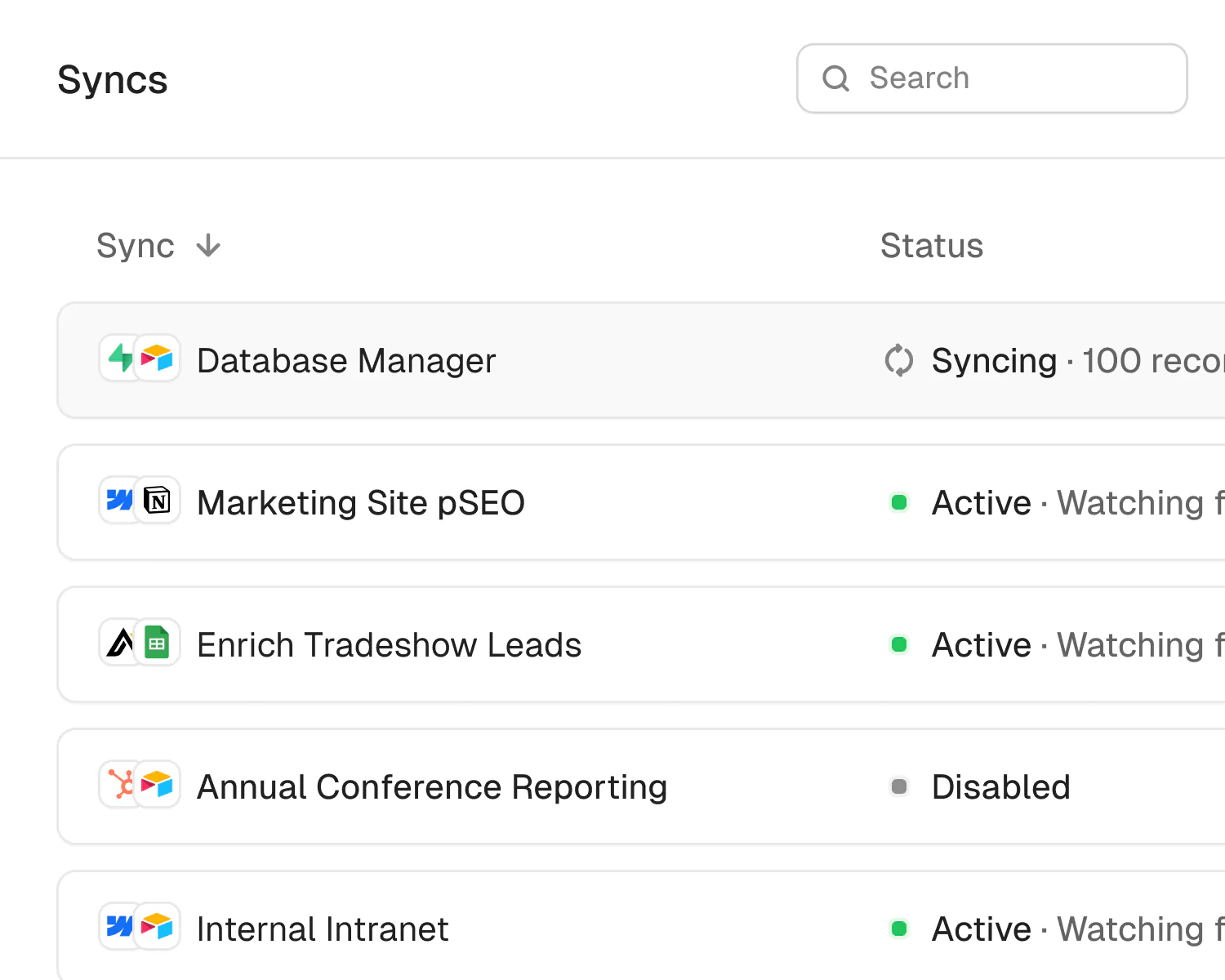
Before anything moves, Whalesync shows you a preview of how many records will be created in each tool, so there are no surprises. When it looks right, activate the sync. From that moment on, changes flow both ways in real time: a new row in Postgres becomes a record in Salesforce, and an edit in Salesforce lands back in your database.
What syncs between PostgreSQL and Salesforce
On the Salesforce side, Whalesync works with the objects your team actually uses:
- Accounts
- Contacts
- Leads
- Opportunities
- Tasks
- Custom objects, discovered automatically from your Salesforce schema
On the PostgreSQL side, you choose which tables participate. Because custom objects are discovered from your schema, you are not limited to the standard CRM shapes: if your team tracks projects, subscriptions, or devices as custom objects, those tables can sync too.
Three ways teams use a Postgres to Salesforce sync
Give reps product data inside Salesforce
If you run product-led sales, your best buying signals live in Postgres: signups, activation, usage. Syncing those tables into Salesforce puts that context directly on the account and contact records reps already work from, so they can prioritize outreach without ever asking for an export.
Use Salesforce as a friendly editing layer for your database
Plenty of internal tools are really just a way for an ops team to edit rows in Postgres. With a two-way sync, Salesforce itself can be that interface. When someone corrects an email address or reassigns an account in Salesforce, the fix lands in your database too, and every internal system that reads from Postgres benefits.
Power internal apps and analysis with CRM data
Going the other direction, syncing Salesforce into Postgres gives you your CRM in SQL. Your data team can query pipeline with the tools they already use, join opportunities against product tables, and feed internal dashboards, all without writing or maintaining Salesforce API code.
Start syncing today
PostgreSQL and Salesforce are both systems of record, and they are far more useful when they agree with each other. With Whalesync you can set up a two-way sync between PostgreSQL and Salesforce in about five minutes, keep both sides current in real time, and retire the export-import routine for good. Start your free trial and see how much smoother things run when your database and your CRM share one source of truth.
About Salesforce and Postgres
Salesforce
Salesforce is the world's most popular CRM for sales teams.
What syncs
Accounts, Contacts, Leads, Opportunities, Tasks, Campaigns, Campaign Members, Cases, Users, Profiles, Record Types, and Custom Objects
Postgres
Postgres is an advanced, enterprise-grade open-source relational database.
What syncs
All Tables
Powerful features, built for reliability
Get the power of an engineering-grade data sync with the simplicity of a no-code tool. Whalesync lets you build a robust, two-way, real-time sync between your apps in minutes, all through a simple visual interface.
Real-time & historical sync
Instantly sync new changes and bring over all your historical data. Your records will be up-to-date across apps from day one.
Efficient error handling
Instant email alerts for quick issue monitoring.
Automatic API handling
Forget about rate limits. Whalesync automatically manages API traffic and retries to ensure your sync runs smoothly without breaking.
Advanced filters
Precision filtering for targeted data sync.
Salesforce and Postgres guides

Built for Enterprise
Connect your data with top-grade security, role based access control, SSO, and audit logs.

Security
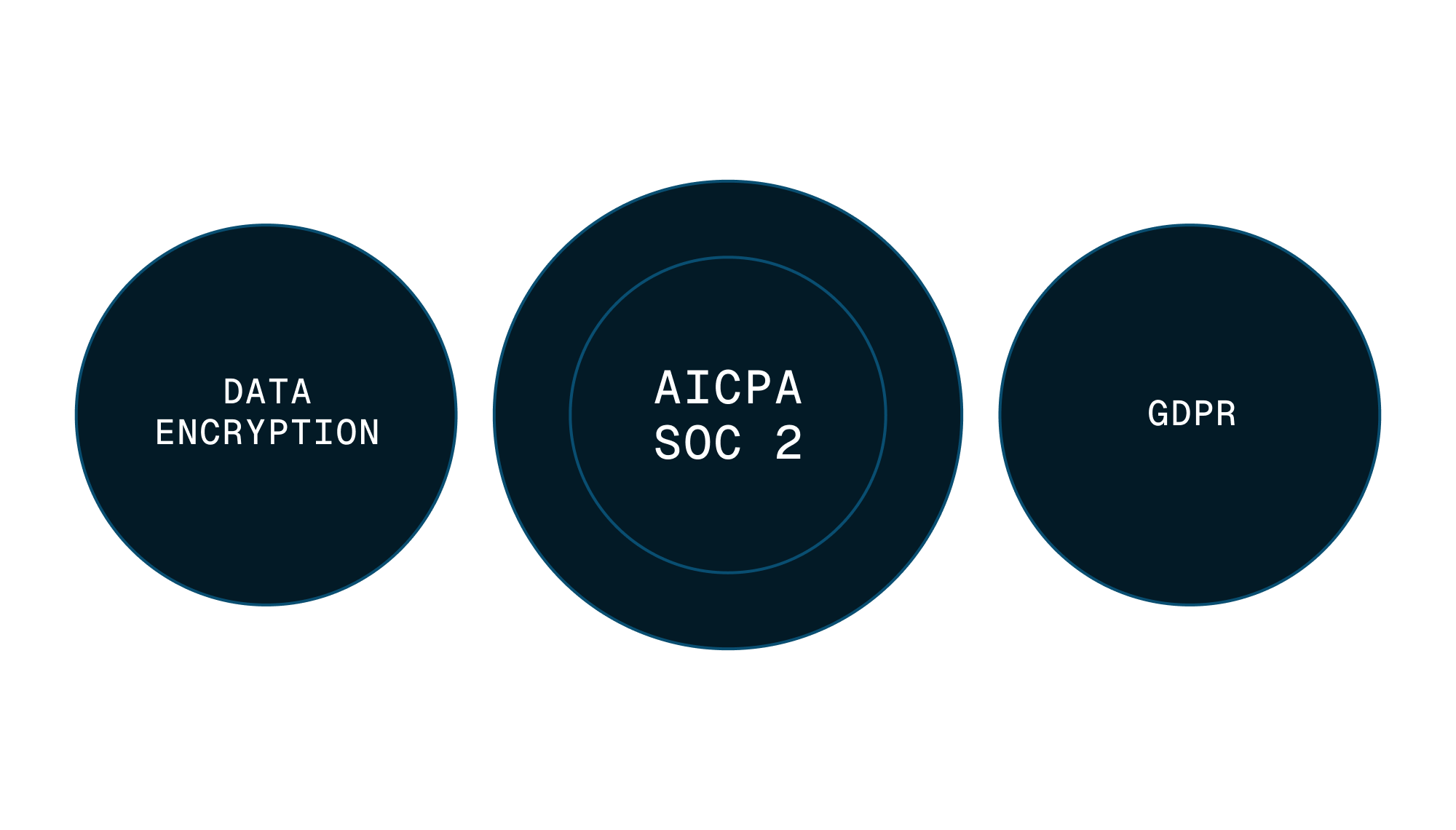
Enterprise-grade data safety with SOC 2 Type II, GDPR compliance, and encryption at rest monitored by Vanta.
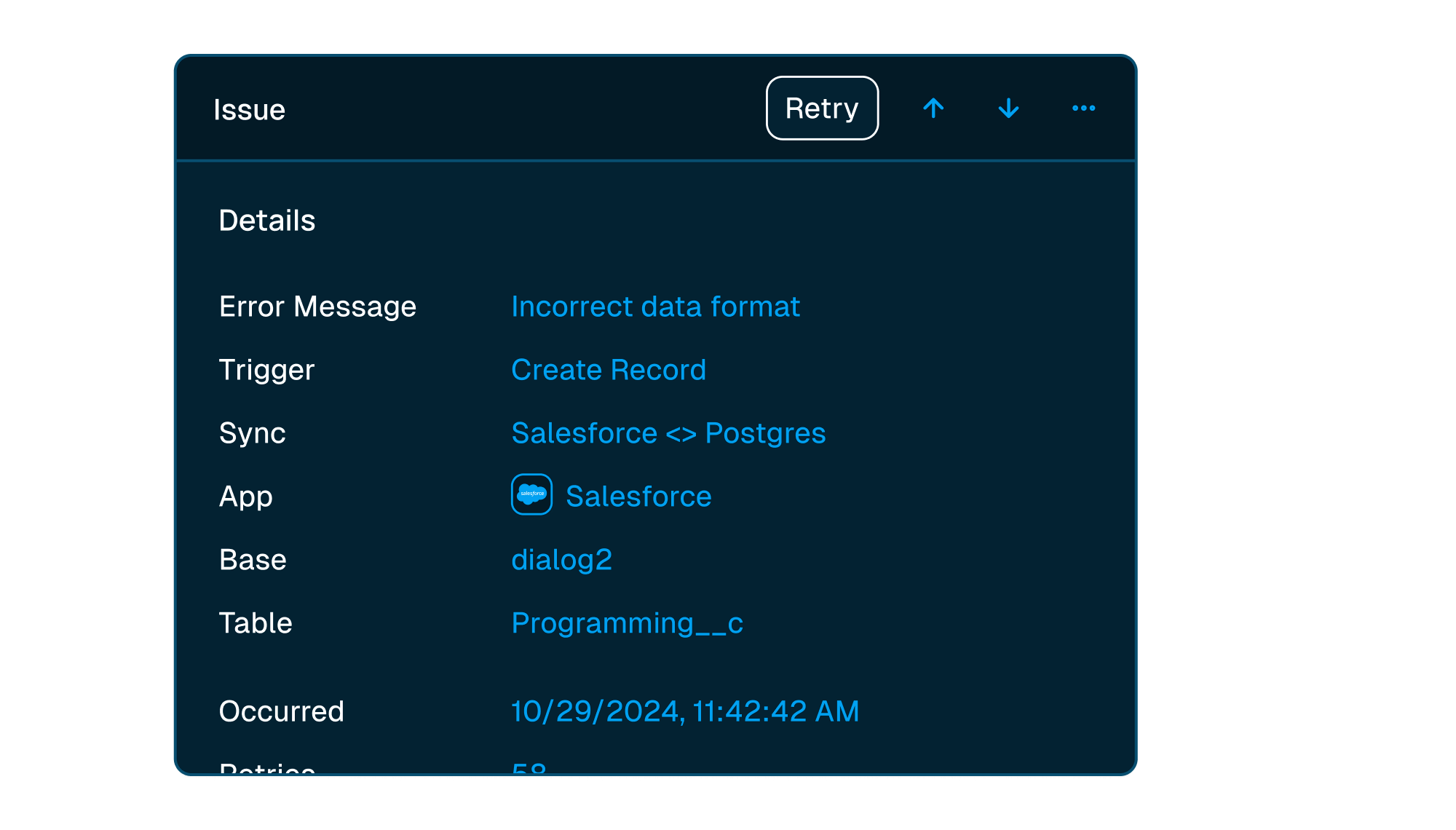


Scale with support
Easily manage issues at scale, while knowing you have a dedicated account manager on stand by to support.
Frequently asked questions
Is it really two-way sync?
Yes! Whalesync offers true two-way sync. Unlike most apps that offer one-way syncs in two directions, Whalesync actually keeps your data in sync bi-directionally. Update data in one app and see it instantly to sync to the other (or vice-versa).
What counts as a "record in sync"?
When a record syncs for the first time it becomes a record in sync. For example, if you sync 10 rows from Airtable to Webflow, you will have 10 records in sync. We do not "double-count" records across the two different apps.
Unlike other automation tools that count updates or tasks, Whalesync allows unlimited updates: those records can change as many times as you'd like.
What is a "sync"?
A sync is a connection between two different apps (e.g. Salesforce & Airtable). When you turn sync on, Whalesync will continuously sync data between your apps.
A single sync includes as many data tables and field as you'd like.
Does Whalesync support multi-reference fields? Rich text?
You bet! We've simplified all the annoying parts of setting up a sync with Zapier. We support multi-reference fields, rich text, and images. For a full list, see our supported fields docs.
What happens if my data has an error and can't be synced?
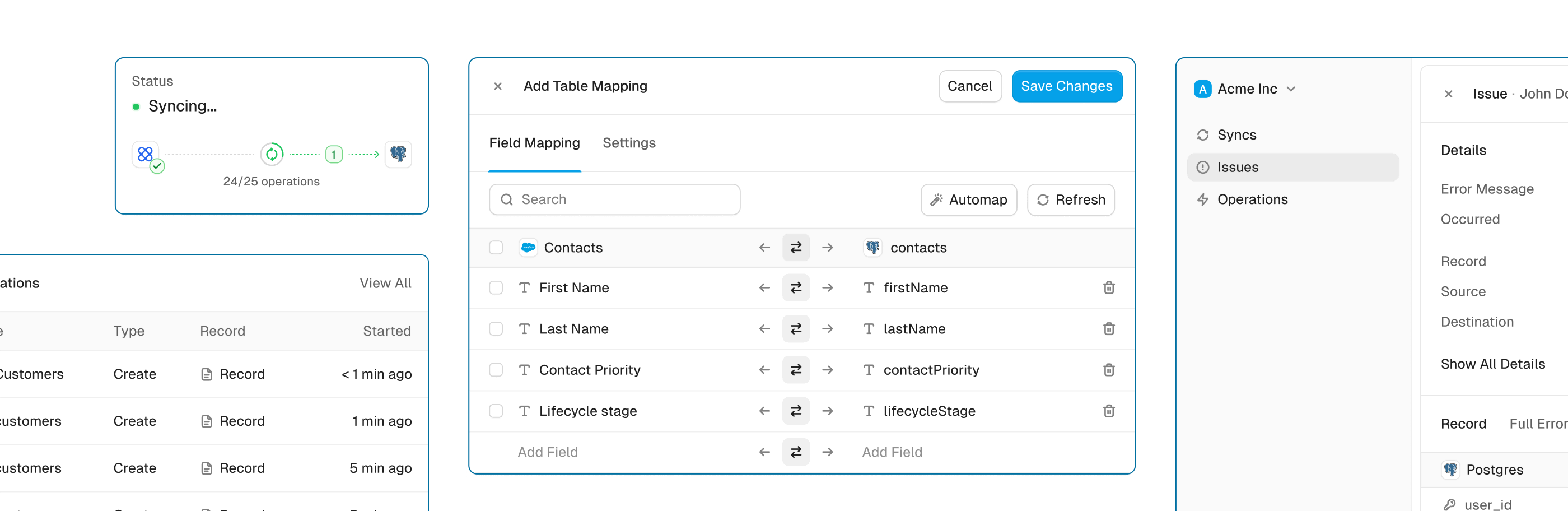
If data can't be synced (e.g. a required field is missing), Whalesync will alert you on the Issues page. This alert provides the exact error from your destination app and any other info that will help you fix the issue. In the meantime, Whalesync will continue to sync all data that doesn't have errors.
Do you offer a discount for nonprofits?
Absolutely! We love supporting organizations that are making the world a better place, so we're happy to offer a 20% discount to all nonprofits. To apply, just send us a note with proof of your nonprofit status (e.g. your 501(c)(3) determination letter) to support@whalesync.com and we'll get the discount applied to your account.




Connect your tools in minutes


