Airtable Webflow Two-Way Sync: The Complete Guide (2026)
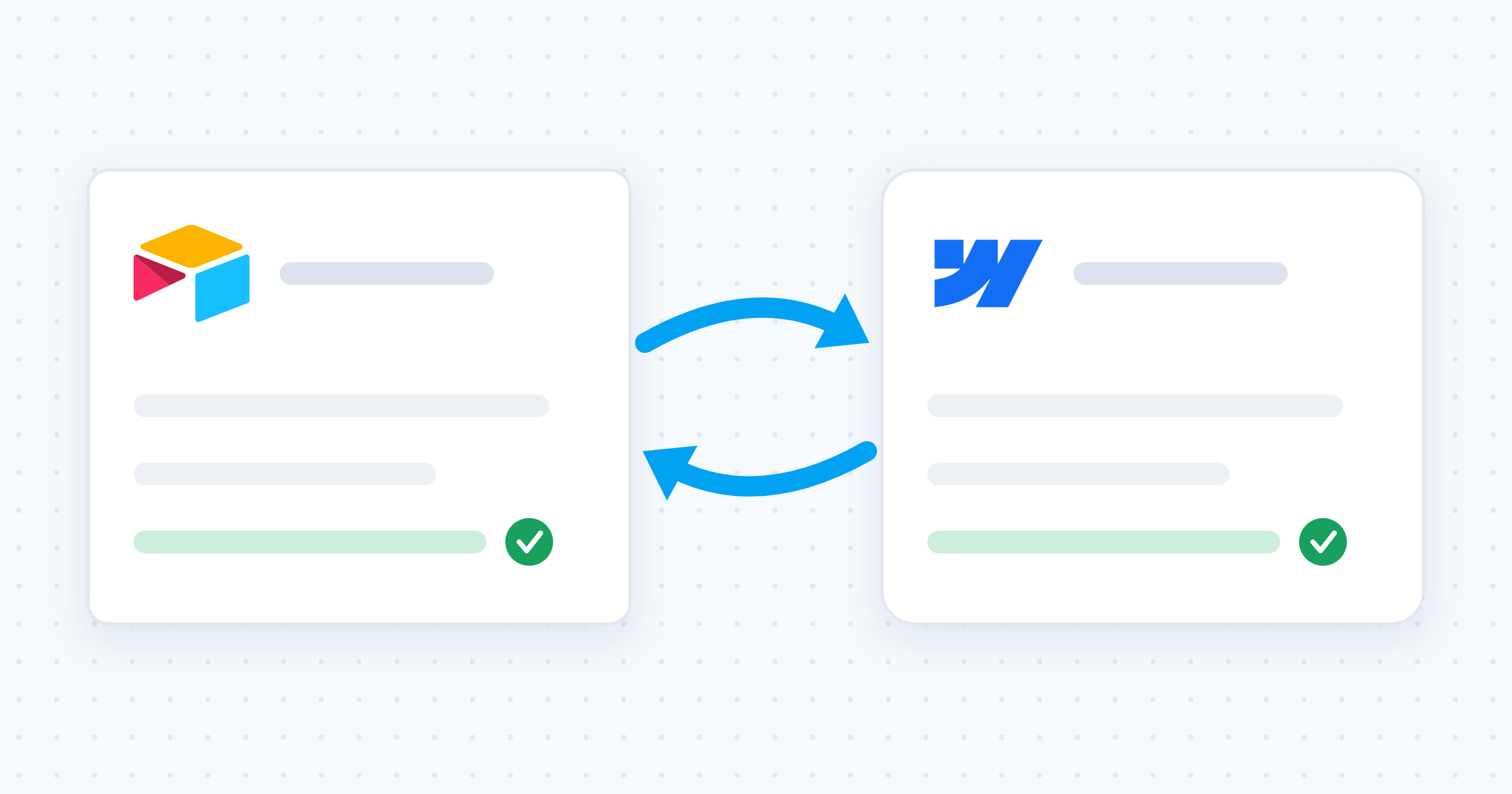
Every way to connect Airtable and Webflow, with the honest limits of each, a field-mapping checklist, and a five-step setup for real-time two-way sync.

Airtable Webflow Two-Way Sync: The Complete Guide (2026)
Your content lives in Airtable. Your site runs on Webflow. Every time a post, listing, or landing page changes, someone retypes it field by field, and the published site sits one step behind the base that feeds it.
Quick answer: Webflow has no native Airtable integration, so two-way sync needs a third-party tool. Zapier, Make, and most Airtable-to-Webflow sync apps move data one direction only. To edit in either tool and have the other match, use a two-way sync platform such as Whalesync: connect both accounts, map your Airtable table to a Webflow CMS collection, then switch the sync on. Setup is no-code and takes minutes.
Every way to connect Airtable and Webflow
Six methods, each with a real limit. Scan the table, then read the one you are weighing.
| Method | Direction | Effort | Best for |
|---|---|---|---|
| Manual CMS entry | None, you are the sync | No setup, hours every update | A few items you change once a quarter |
| CSV import | One way, one time | Minutes, repeated forever | A single migration |
| Zapier or Make | One way per scenario | Medium, one scenario per change type | Low volume, simple triggers |
| Webflow Data API | Whatever you build | High, needs a developer | Custom logic and edge cases |
| One-way sync apps | Airtable to Webflow | Low, no code | Airtable as the only source of truth |
| Whalesync two-way sync | Two way, real time | Low, no code, minutes | Teams that edit in both tools |
1. Manual CMS entry
Open both tools and retype each record as a Webflow CMS item. Fine for a five-item site you touch once a quarter. Past that it costs hours per batch, invites copy-paste errors, and guarantees drift: the base changes faster than anyone can retype it.
2. CSV import into Webflow
Export a table from Airtable and import the CSV into a Webflow collection in one pass. Good for a one-time migration. The limit is structural: a CSV is a snapshot, not a connection. The moment the base changes, the import is stale, and repeat imports leave you reconciling duplicates by hand.
3. Zapier or Make automations
Both can watch Airtable and push records into Webflow. That beats retyping, and the limits show up fast:
- One direction only. Webflow edits never flow back, so the base quietly stops being the source of truth.
- One scenario per change type. Creates, updates, and deletes each need their own build, and every new field means more maintenance.
- Per-task pricing. One bulk edit across hundreds of records can burn a monthly task quota.
- Loop risk. Pointing two one-way automations at each other to fake two-way sync can trigger an endless update cycle.
4. The Webflow Data API
An Airtable script or automation can call Webflow's Data API directly to create, update, and delete items. You get total control at the highest cost: someone has to write it, handle authorization, retry failures, and maintain it as fields change. Webflow's API is rate limited, so a large first import moves in batches rather than all at once.
5. One-way sync apps built for this pair
Several tools specialize in pushing Airtable into Webflow CMS with visual field mapping and no code. PowerImporter states it offers one-way sync, designed for teams that treat Airtable as the single source of truth. Finsweet's CMS Bridge documents an Airtable-to-Webflow dataflow and a Webflow-to-Airtable dataflow, each set up separately. Byteline offers one-way or two-way sync configurations. These are real options if your team only ever edits in Airtable. Check the direction before you commit, because a one-way pipe ignores or overwrites anything an editor changes in Webflow.
6. Real-time two-way sync (Whalesync)
A two-way sync connects an Airtable table to a Webflow collection at the table level. Change a record in either tool and the other mirrors it in real time. No code, no per-event automations, nothing to rebuild when you add a field. The setup is below.
Why two-way sync beats one-way
One-way automation assumes every edit happens in one tool. Real teams do not work that way. A writer drafts in Airtable, then fixes a headline in Webflow while previewing the page. With a one-way pipe that fix is invisible to Airtable, and the next run either overwrites it or leaves the two tools disagreeing forever. Teams running Airtable as a CMS hit this in the first week.
Two-way sync makes both tools safe to edit:
- Edits flow both ways, so Airtable and Webflow always match.
- Whole tables stay connected, not individual trigger events, so there is nothing to rebuild as your content grows.
- Existing records come along. Whalesync copies what is already there when you activate a sync, not just new changes.
Before you map: how Airtable fields land in Webflow
Most failed syncs are field problems, not sync problems. Sort this out before you connect anything.
- Clean matches. Single line text to plain text, long text to rich text, number to number, date to date, checkbox to switch, attachment to image, multiple attachments to multi-image.
- Linked records to references. Airtable linked records map to Webflow reference and multi-reference fields, so related collections stay related.
- Single select to option. The matching option has to already exist in the Webflow field, spelled the same way.
- No Webflow equivalent. Duration, rollup, barcode, collaborator, created time, and last modified time have nowhere to land. Convert the value to a text or formula field first if the site needs it.
- Slugs. Every Webflow item needs a unique slug. Keep a dedicated slug column in Airtable rather than letting each tool guess.
Multi-select is the field type people trip on most. See syncing Airtable multi-select fields with Webflow for the fix.
How to set up Airtable Webflow two-way sync with Whalesync
Five steps, no code.
Step 1: Create a sync. Sign in to Whalesync and create a new sync, choosing Airtable and Webflow as your two apps.
Step 2: Authorize both apps. Grant Whalesync access to your Airtable base and your Webflow site. The setup flow walks you through each authorization.
Step 3: Map your tables and fields. Match each Airtable table to a Webflow collection, then map the fields visually: title to name, slug to slug, body to rich text. Whalesync handles the awkward types too, including multi-reference fields, rich text, and images.
Step 4: Activate the sync. Turn it on. Whalesync copies your existing records across, so both tools start from the same full data set.
Step 5: Test both directions. Edit a record in Airtable and watch the matching Webflow item update. Then edit that item in Webflow and watch Airtable follow. Once both directions check out, publishing is just editing your base.

What teams build with Airtable Webflow two-way sync
Once the pair stays in sync on its own, Airtable becomes the control panel for the whole site. Three patterns come up again and again.
Blog and content operations
Draft, review, and schedule posts in a base with statuses and views, and let the published site follow. For a shorter walkthrough of this workflow, read how to sync Airtable and Webflow the easy way.
Programmatic SEO pages
Keep one row per keyword, city, or integration, and sync that table into a Webflow collection that powers a page template. Bulk-edit a column in the Airtable grid and hundreds of landing pages update with it. Two-way matters most here. When someone fixes a typo on a single page in Webflow, the row behind it stays correct, so the next bulk edit does not undo the fix.
Directories and listing sites
Manage listings, members, or events in Airtable and publish them through Webflow. To accept submissions from the site itself, pair the sync with our guide on sending Webflow form submissions straight to the CMS, then review and approve entries from Airtable.
Frequently asked questions
Does Webflow have a native Airtable integration?
No. Webflow CMS does not connect to an outside database on its own, so every Airtable connection runs through a CSV import, an automation tool, custom API code, or a sync app. That gap is why so many third-party options exist for this one pair.
Can Webflow send data back to Airtable?
Only if the tool you pick supports that direction. Most Airtable-to-Webflow apps push one way, and some offer a separate Webflow-to-Airtable flow you configure on its own. A true two-way sync covers both directions on one connection, so an edit in Webflow updates the Airtable record without a second setup.
Can I use Zapier for two-way sync between Airtable and Webflow?
Not safely. Zapier and Make run one direction per scenario, so faking two-way means pointing two automations at each other. Each update then triggers the other, which can loop and burn through your task quota. Use a purpose-built two-way sync instead.
Will syncing blow past Webflow's CMS item limit?
It can. Webflow caps CMS items per site by plan, and once you hit the ceiling new items stop being created. Count your Airtable rows against your Webflow plan first, and archive what the site does not need before you connect the two.
Ready to retire the copy-paste routine? Create your Whalesync account and set up your first sync in minutes, or start from the Airtable and Webflow connect page to see how the pair works together.
Subscribe for more
Stay up to date with the latest no-code data news, strategies, and insights sent straight to your inbox!