The easiest way to sync Webflow and Supabase
Get true, two-way sync between Webflow and Supabase in minutes. Update data in one tool, and Whalesync mirrors it in the other.


Empowering top operators — From startups to enterprises
-
 Series C$350M
-
 Series C$330M
-
 Series C$100M
-

-
 Series B$72M
-
 Series C$30M
-
 Series A$50M
-
 Series B$86M
-
 Series B$65M
-
 Series B$100M
How to connect Webflow and Supabase in 3 steps
Connect Webflow and Supabase, map the fields you want, and turn sync on. From then on, a change in either app shows up in the other.
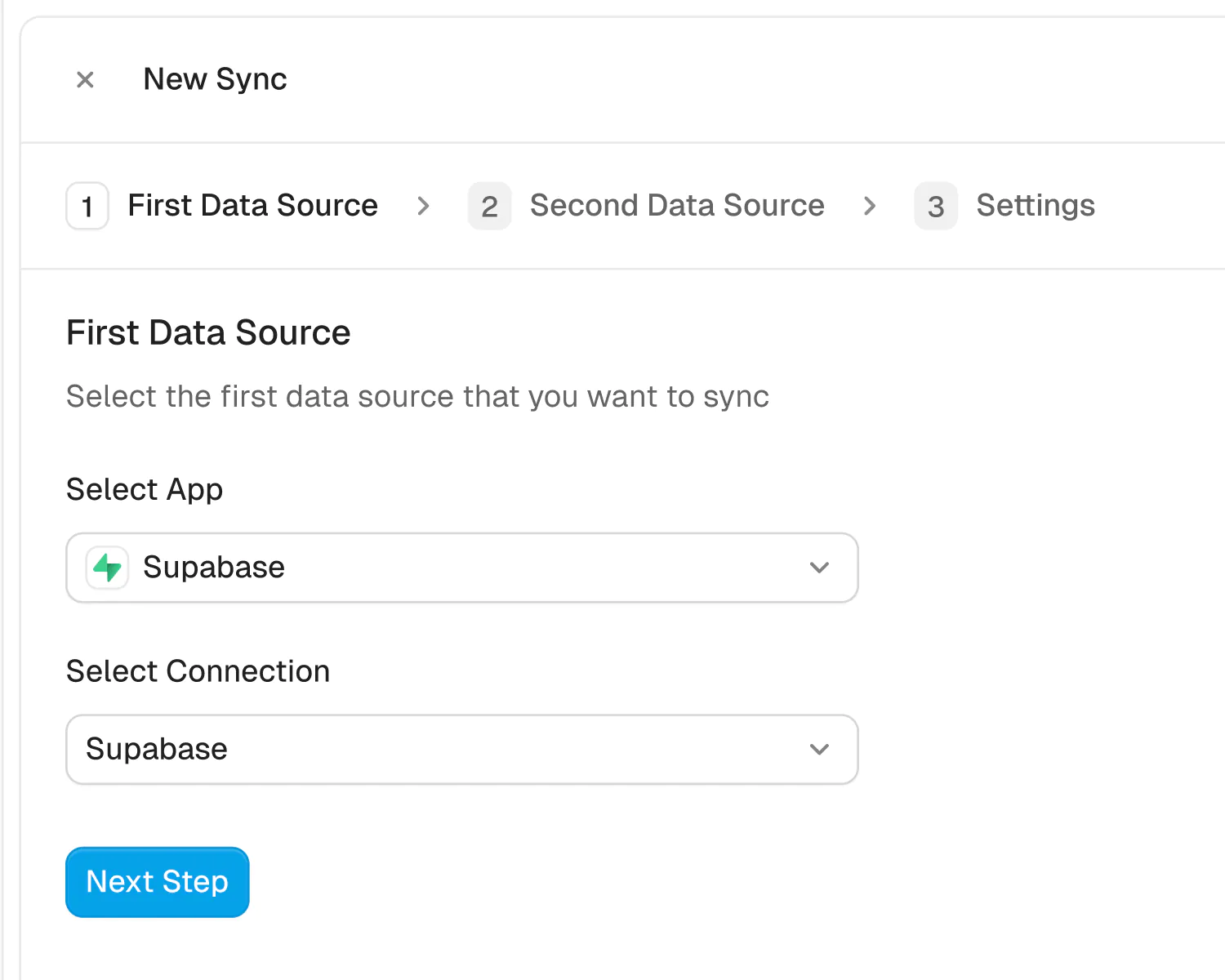
Connect your apps
Securely connect your Webflow and Supabase accounts in seconds. Just authorize Whalesync with a few clicks and you're ready for the next step.
How to sync Supabase to Webflow CMS in 5 minutes
Supabase is a scalable, real-time Postgres backend, perfect for powering apps and websites that need performance, reliability, and live data access. Webflow lets you design and launch stunning dynamic websites with no code required. Together, they give you the best of both worlds: dynamic content stored in your database, published through a beautifully designed Webflow frontend.
Whether you're building a marketplace, directory, or content-driven product, syncing Supabase to Webflow means your site always reflects the latest app data, without manual entry, CSV uploads, or custom code.
With Whalesync, you can sync data from Supabase directly to Webflow.
Here’s how to get started in just five minutes.
Why should you connect Supabase to Webflow?
Connecting Supabase and Webflow CMS allows you to bridge the gap between a powerful backend and a no code frontend. By syncing Supabase and Webflow, you can display real-time data from your app, ensuring your content is always current.
When should you connect Supabase and Webflow?
Here are a two common scenarios where connecting the two makes sense:
- You’re building a listing site or marketplace: Your frontend needs to reflect data such as product availability, pricing etc from Supabase in real time. Syncing Supabase and Webflow with Whalesync is easier than writing code or managing a complex build process just to get your backend data into Webflow.
- You want to power SEO landing pages using content from your database: Programmatic SEO relies on generating large volumes of structured content at scale. By syncing Supabase and Webflow, you can automate page creation and ensure each landing page always reflects the most current data from your database.
How to sync Supabase and Webflow
Here’s a step by step guide to sync Supabase and Webflow.
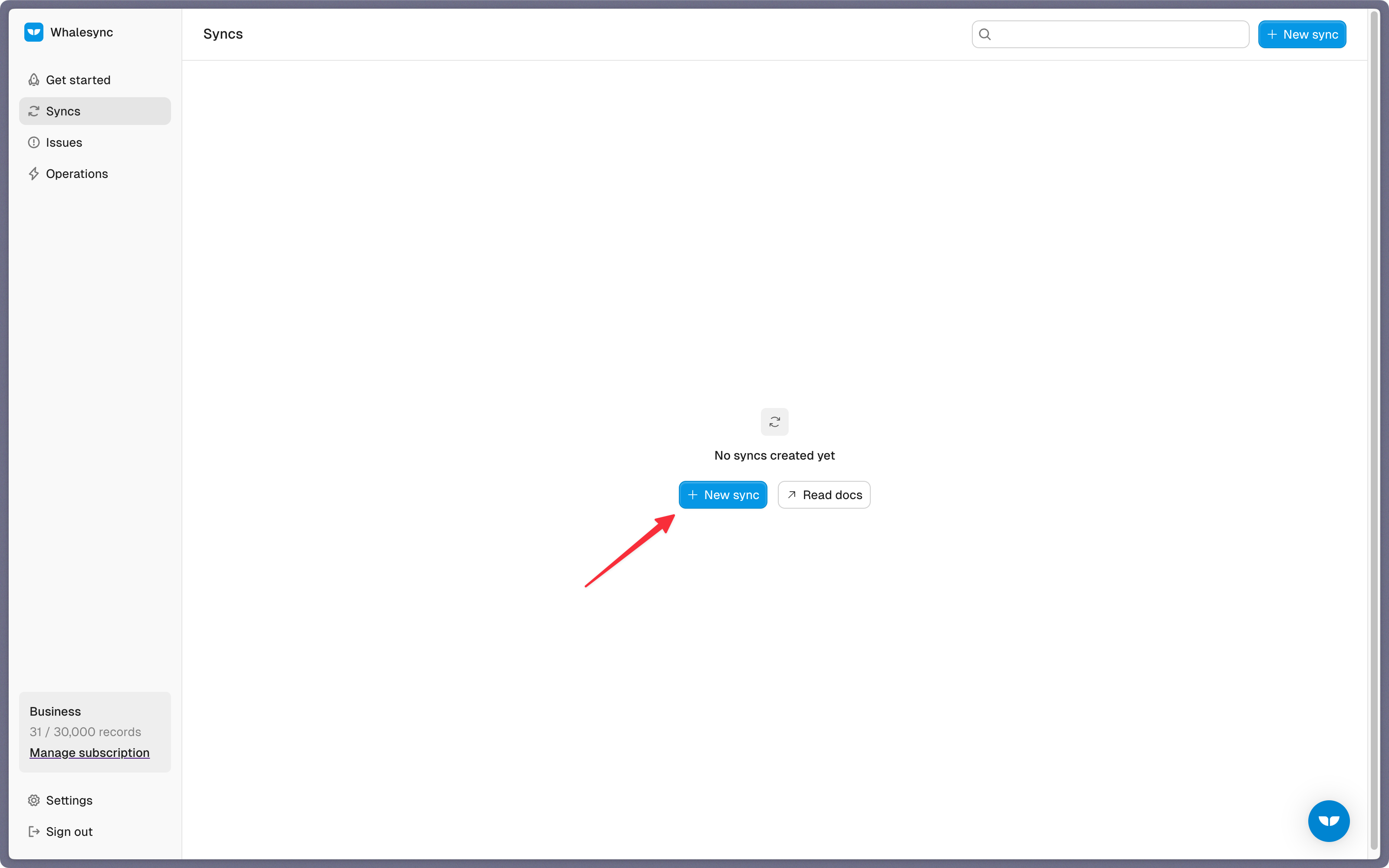
Step 1: Create a new sync
Log in to your Whalesync account and click ‘New sync’
Step 2: Authorize your apps
Select the apps you want to connect. In this case, it’s Supabase and Webflow. Then, authorize these two apps. Authorizing the apps enables Whalesync to have access to your app data in order to complete the syncs.
When you’re authorizing the apps, you need to select the Supabase project you want to sync the data from and the Webflow workspace you want the data to be synced to.

When you’re setting up any sync with Supabase, Whalesync automatically creates a dedicated database user, whalesync_service_account_[ID] to manage the sync.
This dedicated user has the same permissions as your default postgres role. You’re always in control and can manage or delete this user anytime using standard Postgres commands.
Step 3: Map your tables
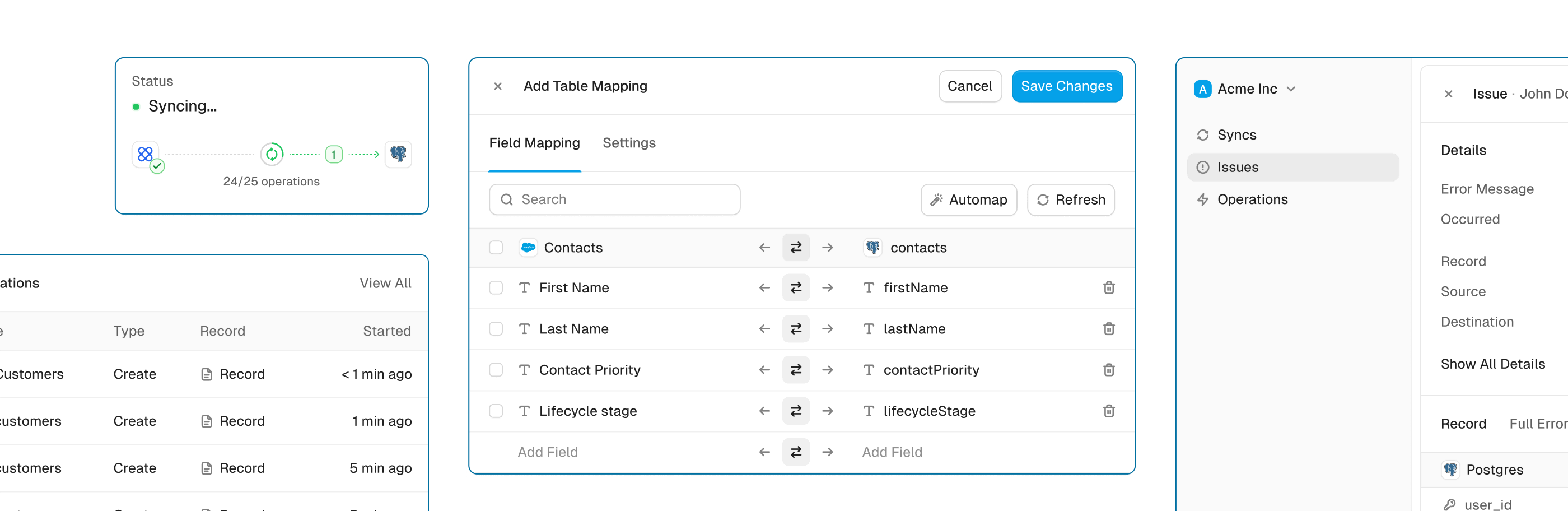
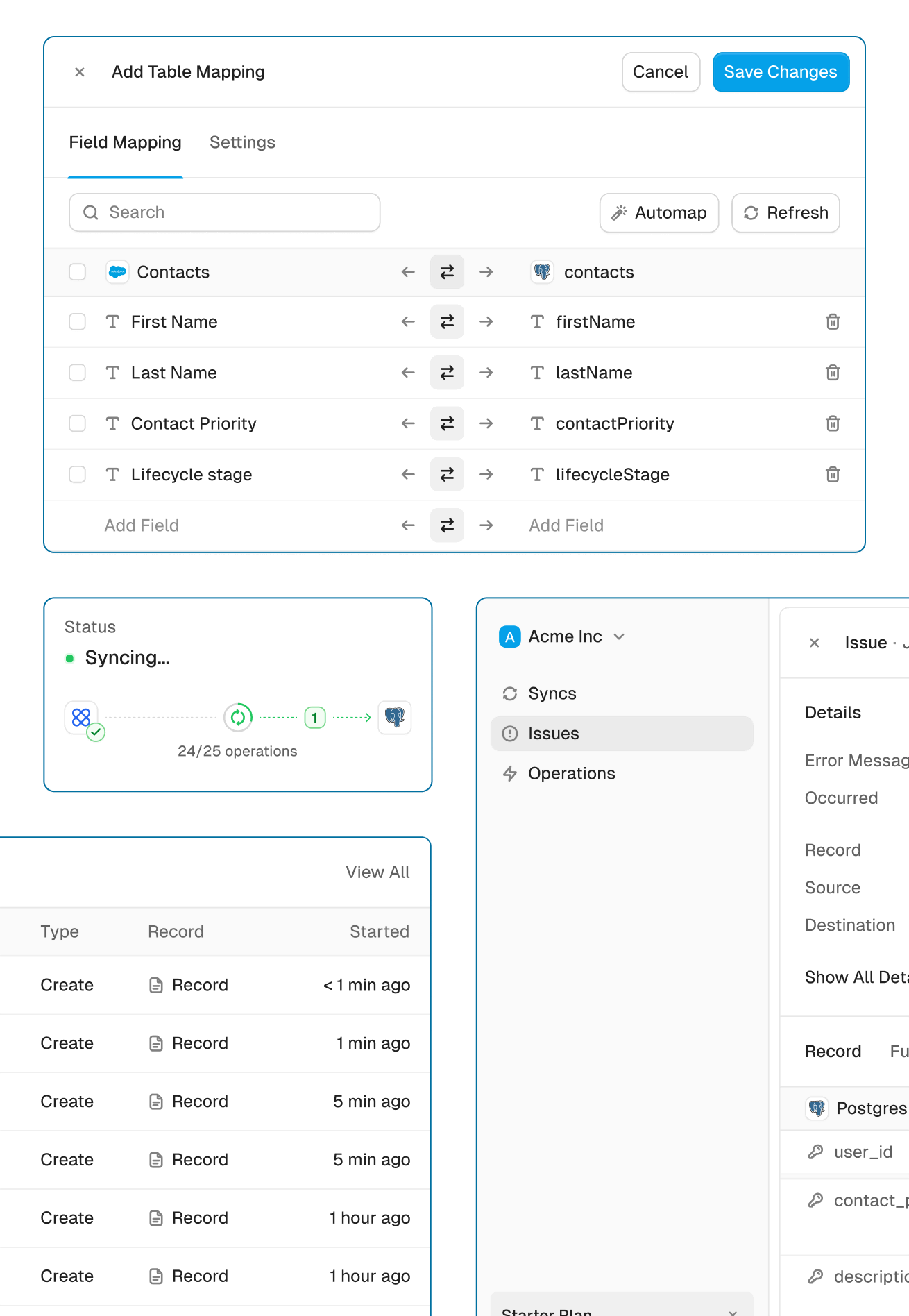
Choose the tables that you want to sync from Supabase to Webflow. You can add multiple table mappings to a sync and related fields. You can also create the tables you want to map from Whalesync’s user interface, making it much faster to get started with your syncing.

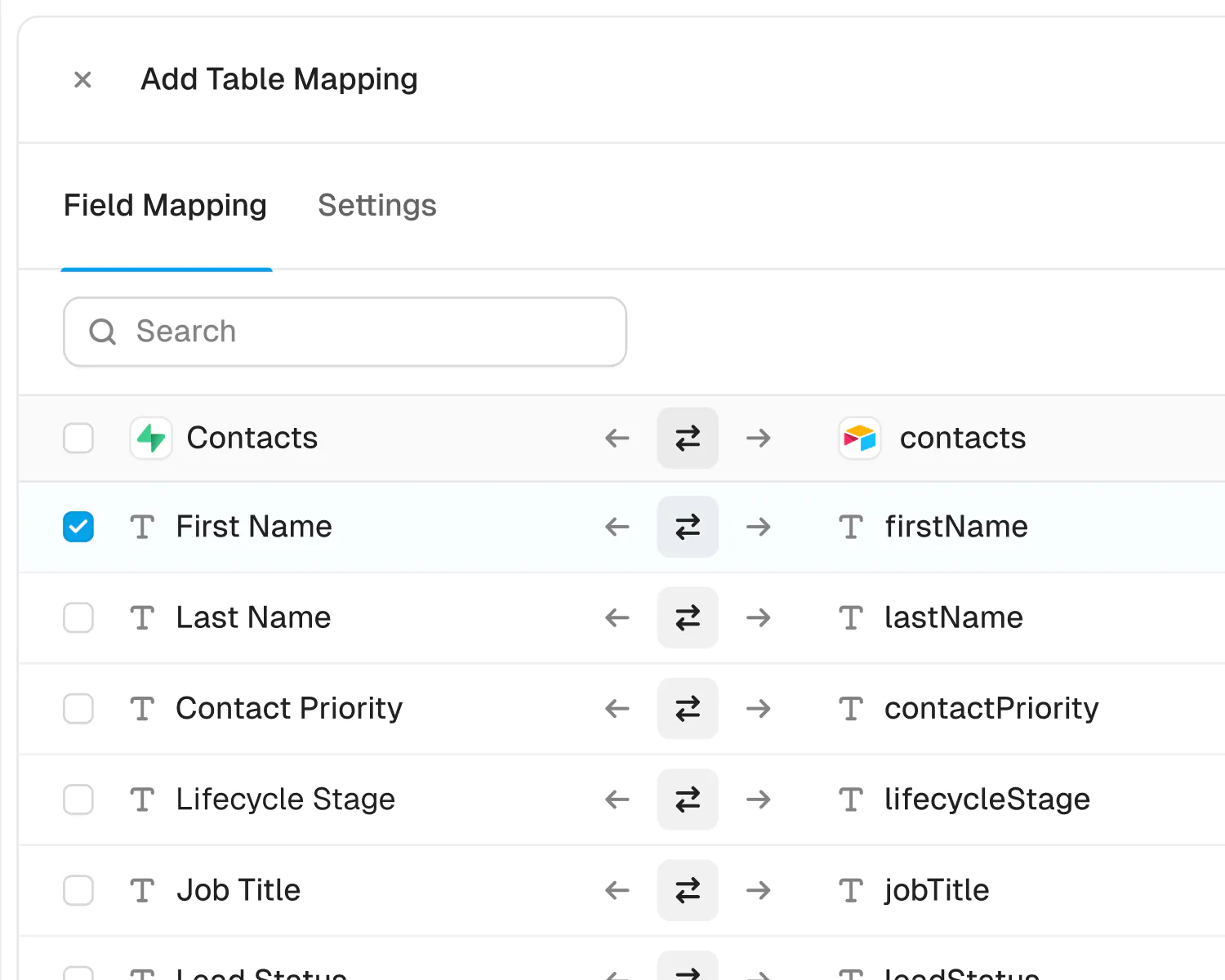
Step 4: Map your fields
You can choose how many fields you want to map, whether you want to map all of the fields or just a few.

You can also create fields here.

If you have existing data in your database, Whalesync will match the records according to the fields you mapped.
If you are starting from a new database that doesn’t have any data, once you start entering data into your database, the data will automatically sync to Webflow.
Step 5: Activate sync
The final step is to activate your sync! Before you activate your sync, you’ll see a preview that shows you how many records will be added to each tool.

Done! Supabase and Webflow is synced 🤝
Now it’s time to start adding to your Supabase database and view your data on your live Webflow site.

Start syncing today
Whether you're building a marketplace, scaling your SEO pages, or building a dynamic content platform, syncing Supabase and Webflow CMS gives you the best of both: a scalable backend and a stunning no code frontend, all updated in real time.
You can also set up a two way sync between Supabase and Webflow, so updates sync automatically between tools.
Ready to connect Supabase and Webflow? Get syncing today
About Webflow and Supabase
Webflow
Webflow is a visual web design tool for building sites without code.
What syncs
All CMS Collections
Supabase
Supabase is an open-source Firebase alternative built on Postgres.
What syncs
All Tables
Powerful features, built for reliability
Get the power of an engineering-grade data sync with the simplicity of a no-code tool. Whalesync lets you build a robust, two-way, real-time sync between your apps in minutes, all through a simple visual interface.
Real-time & historical sync
Instantly sync new changes and bring over all your historical data. Your records will be up-to-date across apps from day one.
Efficient error handling
Instant email alerts for quick issue monitoring.
Automatic API handling
Forget about rate limits. Whalesync automatically manages API traffic and retries to ensure your sync runs smoothly without breaking.
Advanced filters
Precision filtering for targeted data sync.
Webflow and Supabase guides
Built for Enterprise
Connect your data with top-grade security, role based access control, SSO, and audit logs.


Security
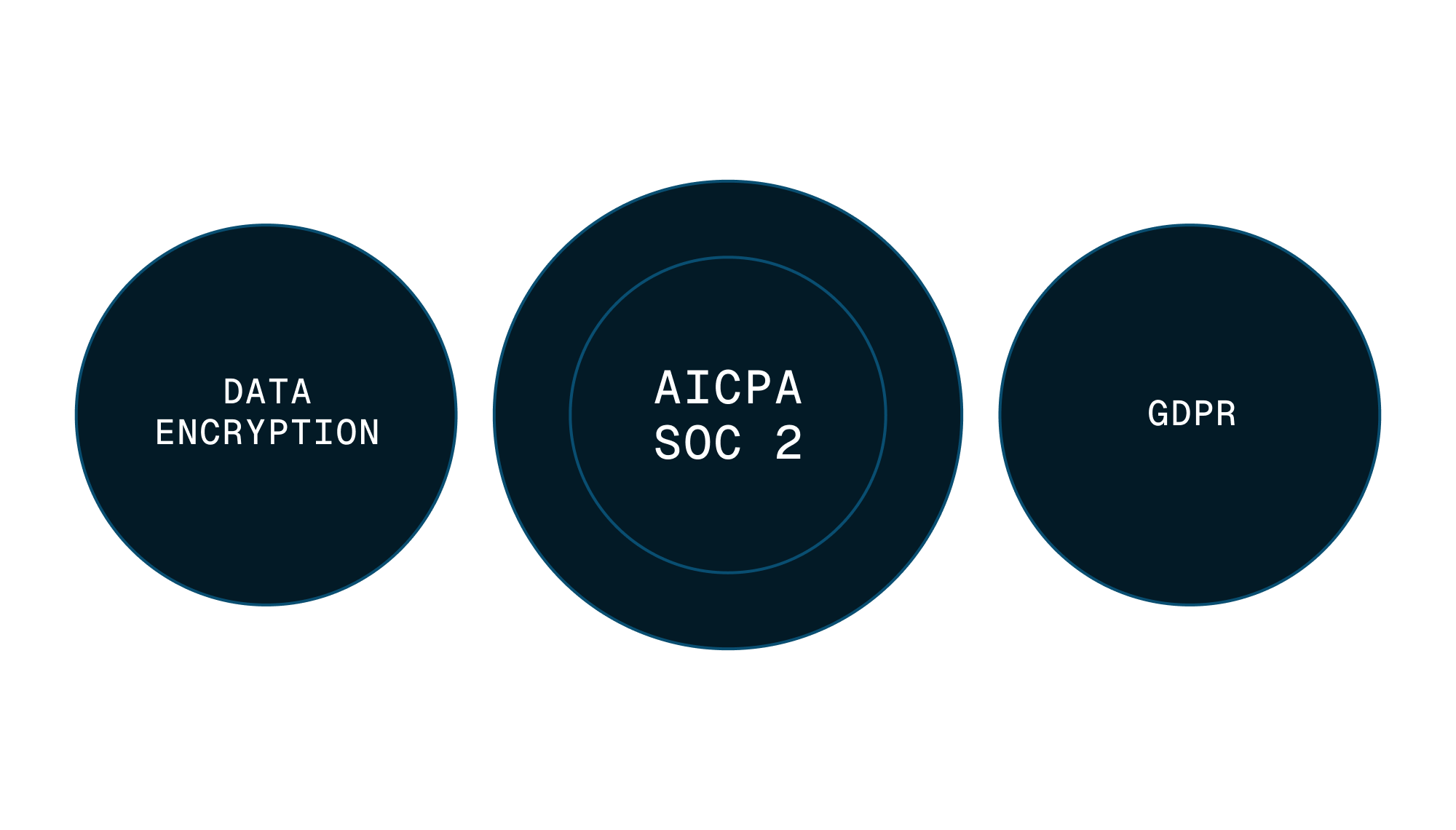
Enterprise-grade data safety with SOC 2 Type II, GDPR compliance, and encryption at rest monitored by Vanta.


Scale with support
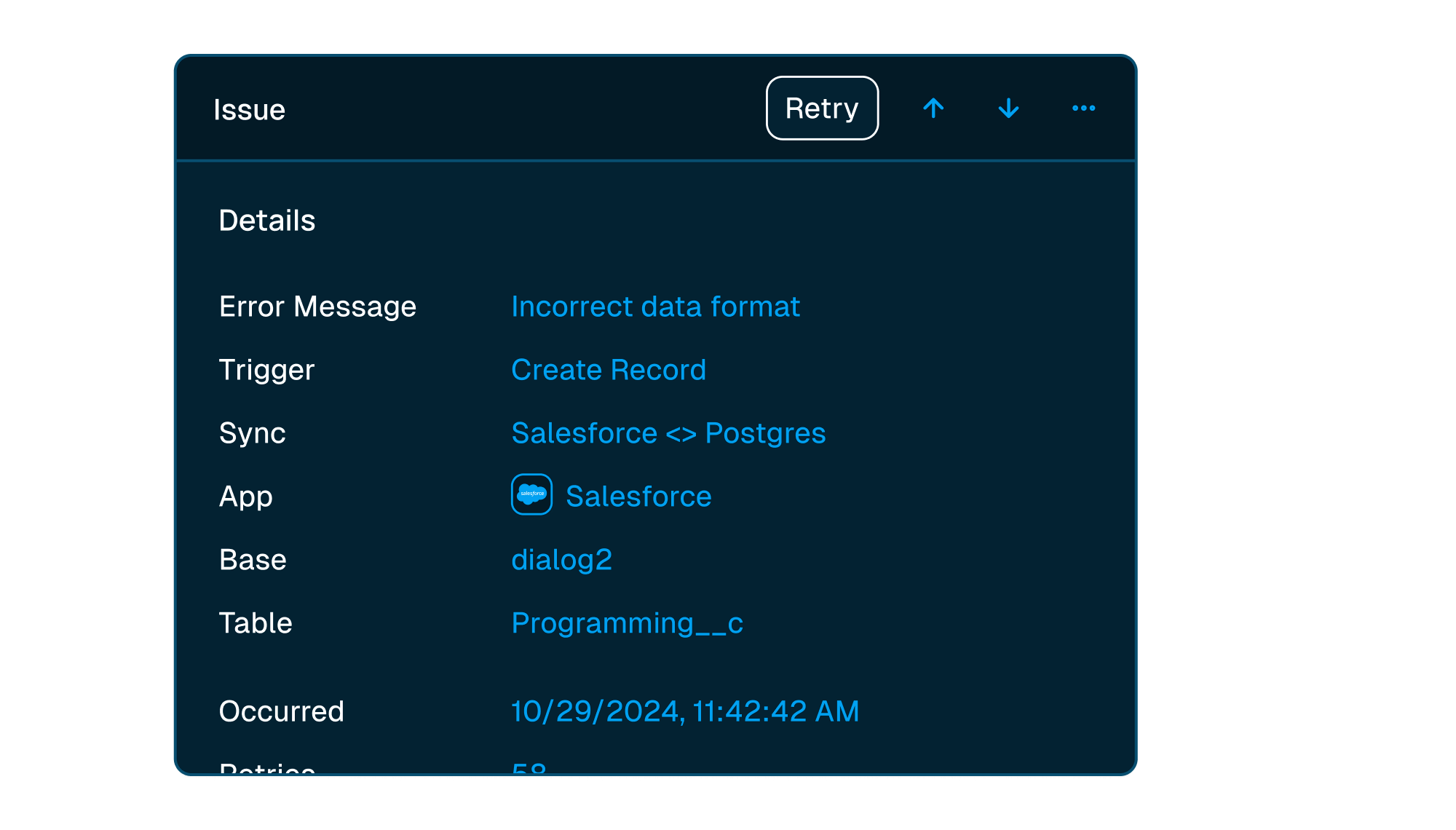
Easily manage issues at scale, while knowing you have a dedicated account manager on stand by to support.
Frequently asked questions
Is it really two-way sync?
Yes! Whalesync offers true two-way sync. Unlike most apps that offer one-way syncs in two directions, Whalesync actually keeps your data in sync bi-directionally. Update data in one app and see it instantly to sync to the other (or vice-versa).
What counts as a "record in sync"?
When a record syncs for the first time it becomes a record in sync. For example, if you sync 10 rows from Airtable to Webflow, you will have 10 records in sync. We do not "double-count" records across the two different apps.
Unlike other automation tools that count updates or tasks, Whalesync allows unlimited updates: those records can change as many times as you'd like.
What is a "sync"?
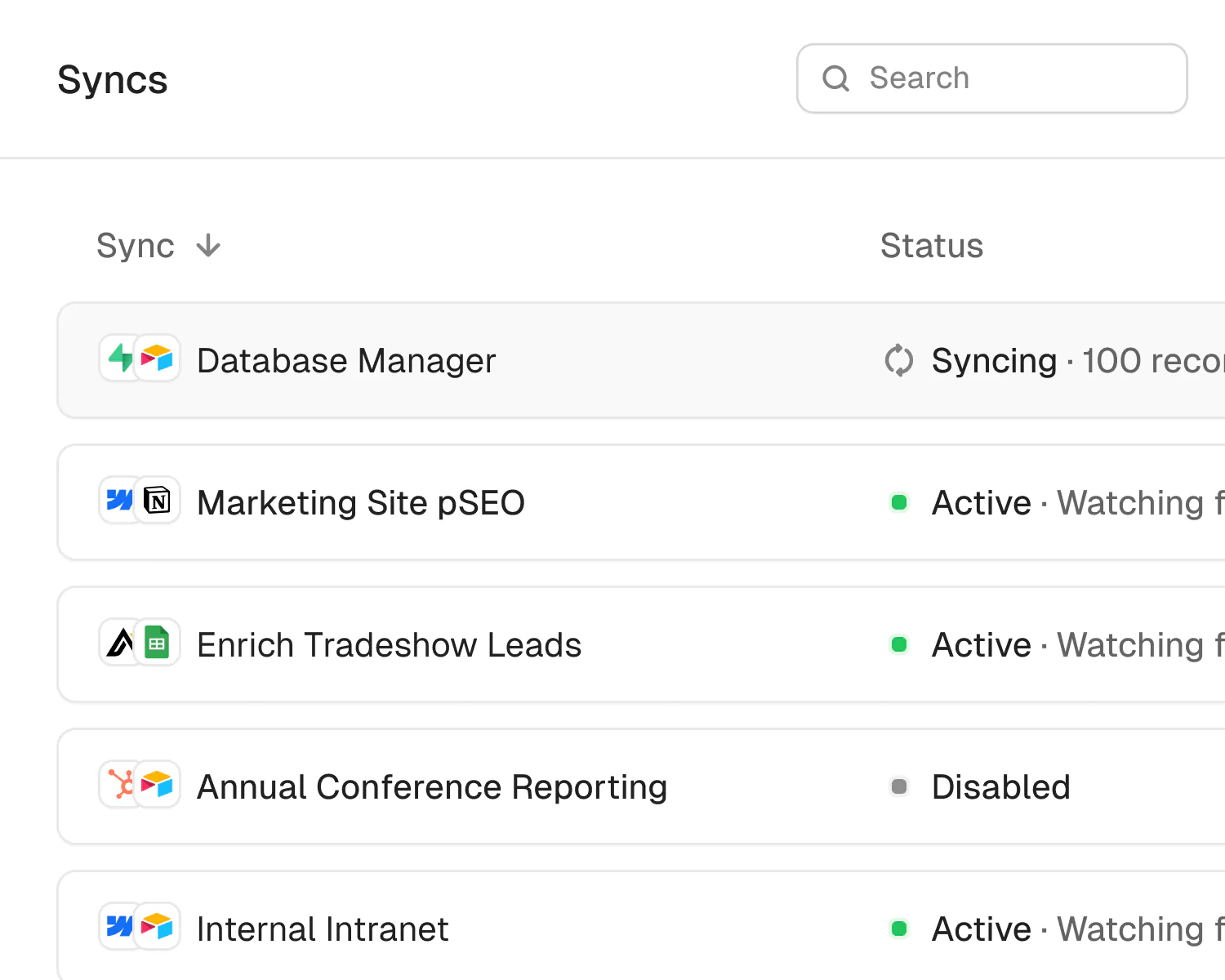
A sync is a connection between two different apps (e.g. Salesforce & Airtable). When you turn sync on, Whalesync will continuously sync data between your apps.
A single sync includes as many data tables and field as you'd like.
Does Whalesync support multi-reference fields? Rich text?
You bet! We've simplified all the annoying parts of setting up a sync with Zapier. We support multi-reference fields, rich text, and images. For a full list, see our supported fields docs.
What happens if my data has an error and can't be synced?
If data can't be synced (e.g. a required field is missing), Whalesync will alert you on the Issues page. This alert provides the exact error from your destination app and any other info that will help you fix the issue. In the meantime, Whalesync will continue to sync all data that doesn't have errors.
Do you offer a discount for nonprofits?
Absolutely! We love supporting organizations that are making the world a better place, so we're happy to offer a 20% discount to all nonprofits. To apply, just send us a note with proof of your nonprofit status (e.g. your 501(c)(3) determination letter) to support@whalesync.com and we'll get the discount applied to your account.


Connect your tools in minutes